




Today we’d like to introduce you to Susan Rogers.
Susan, we appreciate you taking the time to share your story with us today. Where does your story begin?
Like many people who enter college, it took me a while to land on a career that seemed to match my interests and gifts. I eventually landed on Occupational Therapy and worked in that field for 9 years after graduating from the University of Florida. I loved being part of the healing journey of my patients. Over time, it became clear that one of the things I loved most was making space to hear their stories.
This curiosity and love for holding space to listen and connect with people from many different backgrounds kept coming up, including in our church. I was increasingly drawn to facilitating small group conversations and connecting with youth. Their willingness to ask questions and share what was really happening in their lives felt refreshing. Why, I wondered, do my adult peers and I not ask this many questions? Why do we shy away from this kind of vulnerability and authenticity?
I remember having a conversation with one of our ministers, who planted a seed that grew from there. He asked if I would consider going to seminary to explore a vocation in ministry. At first, I could not imagine uprooting our family and pursuing a vague call into ministry, but the question would not leave me alone. With the unwavering support of my spouse, our family moved to Atlanta in 2005 so that I could begin seminary at the McAfee School of Theology.
The next 5 years were not just a time of learning, but a time of listening, expanding and exploring my future in ministry. I was drawn to learning about new expressions of church, the changes in our religious landscape, and how cultural shifts impact faith. Ultimately, we returned to Jacksonville to start a new faith community rooted in the way of Jesus – a place where real stories and resources could be shared, where questions can be asked without judgement, where the lines between “us” and “them” are being broken down, and where all are (genuinely) welcomed into community – no matter their belief or lack thereof.
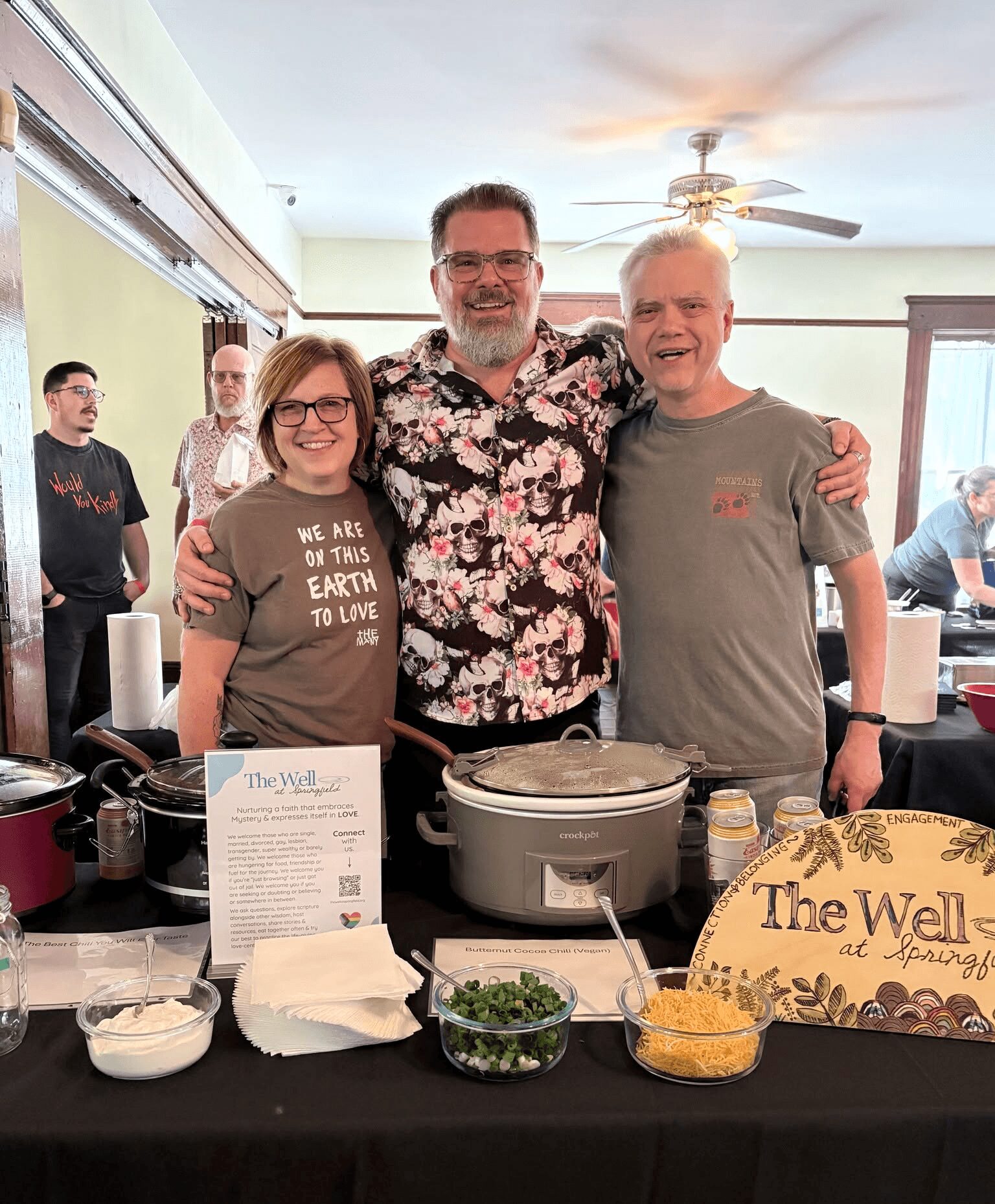
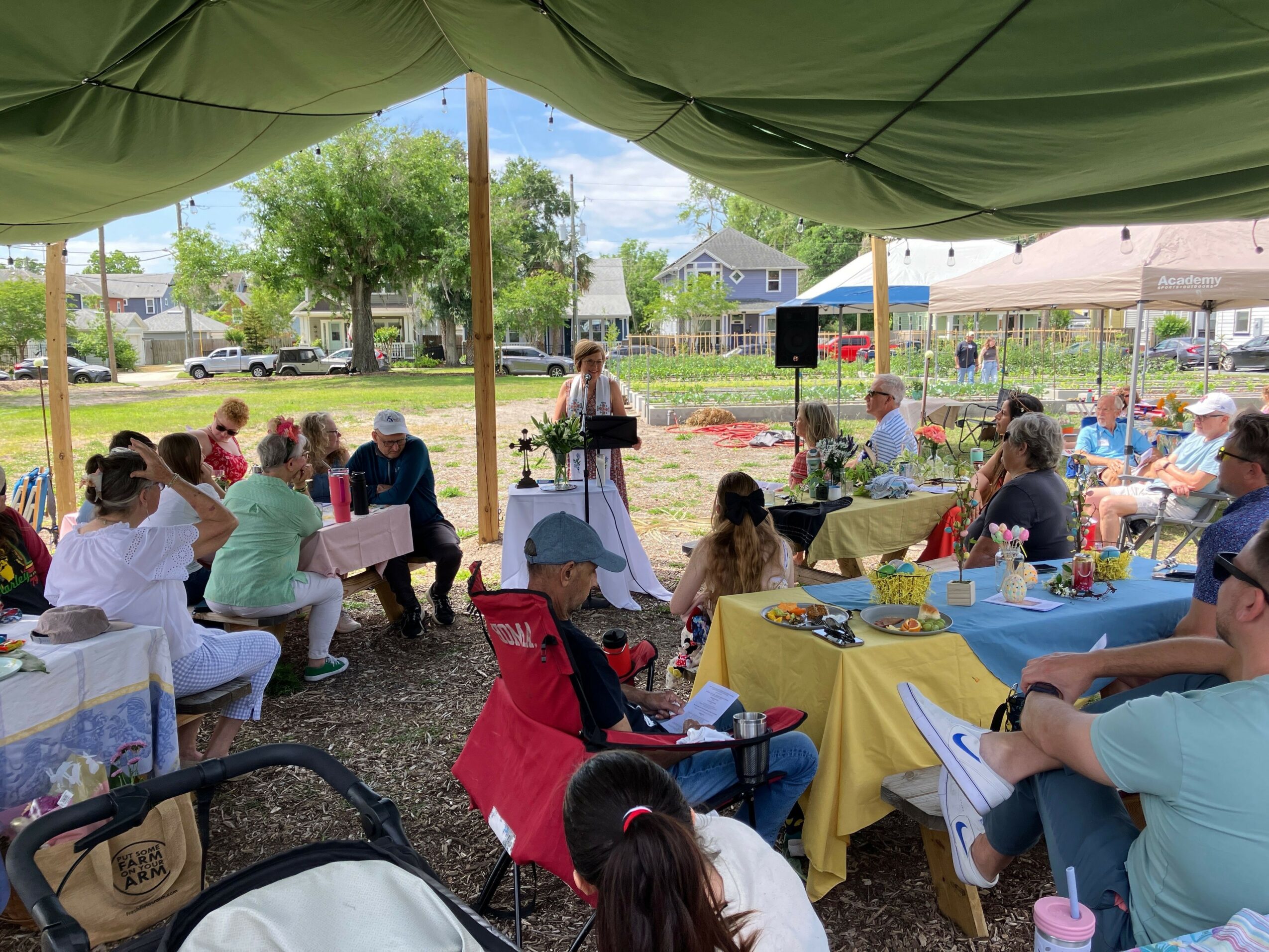
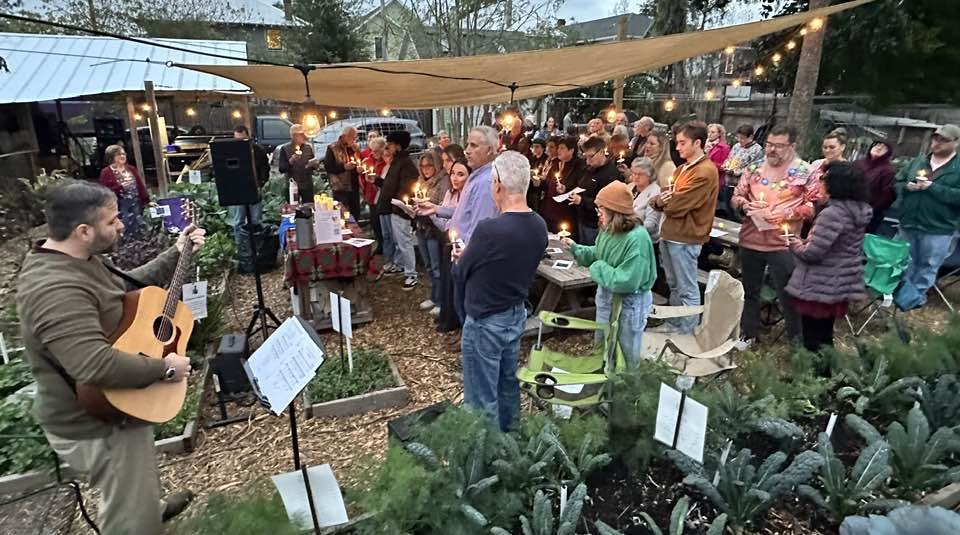
I, along with a small yet sturdy group of volunteers, started The Well at Springfield in 2011. We are reimagining what church can look like free from some of our assumptions and free from the barriers that keep people from experiencing real welcome. We are creating space for life-long church-goers, curious explorers, skeptics and church-averse people to sit alongside one another as we learn to love our neighbors as we love ourselves.
Would you say it’s been a smooth road, and if not what are some of the biggest challenges you’ve faced along the way?
From the beginning, we made owning or even renting a full-time space optional. We have shared space with a ton of open-hearted neighbors. We have met in a museum, an event center, a brewery, another neighborhood church, on farms, in a school yard, in a local non-profit building, and in homes. Our mobility has helped us to connect with many amazing people and form some really rich relationships. It has also been challenging to find a space that really feels like it exemplifies our identity. We are, for good reason, always at the mercy of whoever is willing to host us. Not owning a building has certainly freed us to spend less of our resources on the maintenance of an old, deteriorating church building, but it can also be inconvenient and add an extra layer of uncertainty at times.
The fluidity of our community can also be a challenge. Among other things, our hypermobile culture and overabundance of options have made community challenging. People float in and out, leave without explanation, or move away. It can cause a fair amount of grief for those left behind, especially given the amount of vulnerability and sharing that happens through The Well. The constancy of change is an unavoidable part of life and I like to think we are learning to navigate it together. I once heard Father Richard Rohr say, “You don’t land. You ocean”. I think that has been one of the most beautiful and challenging truths we are living into.
Thanks for sharing that. So, maybe next you can tell us a bit more about your work?
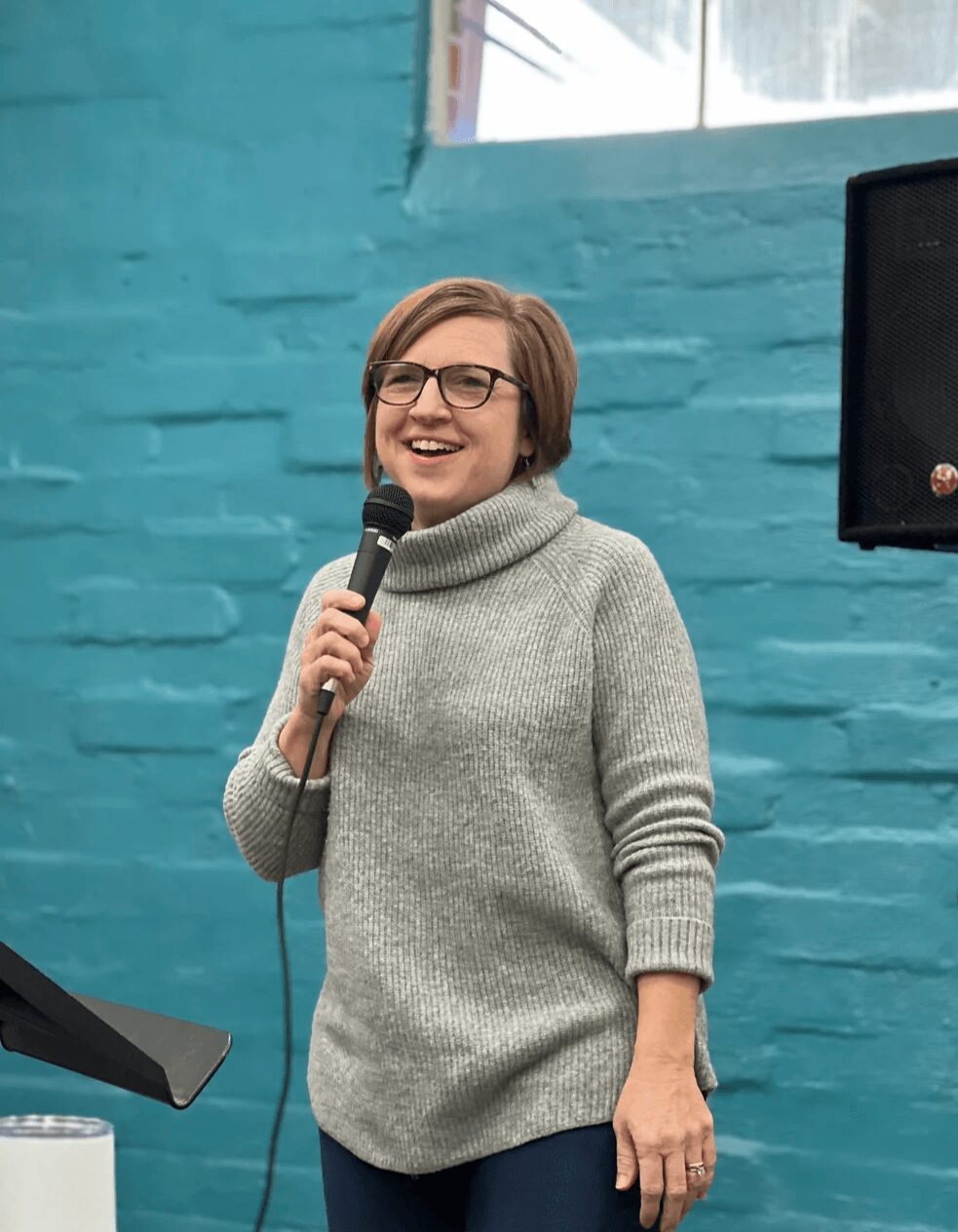
One of the things I love most about being a pastor is that each day looks different. There are days I meet newcomers for coffee and days I sit with those who are at their wits’ end — whether processing a grief or trying to discern a new direction. There are days I spend hours alone reading and studying in preparation for an upcoming Sunday gathering and days I write, share in conversation, visit with a community partner or dream about what is next alongside others in our community.
One of the things I bring to the table is a love for words. I write centering prayers and readings for our community that help us express our gratitude, fears, hurts, and hopes. I love translating the old stories found in scripture and the thick theological language that makes people feel like outsiders into words that connect and can be understood by anyone.
I am also known for being willing to say “I don’t know” and share personal stories, for my creativity and willingness to try new things and for inviting people to share their real stories (not just the shined-up ones). When I was given the gift of sabbatical a few years ago, one community member said, “it’s your presence we will miss”, so I guess I’m known for that, too.
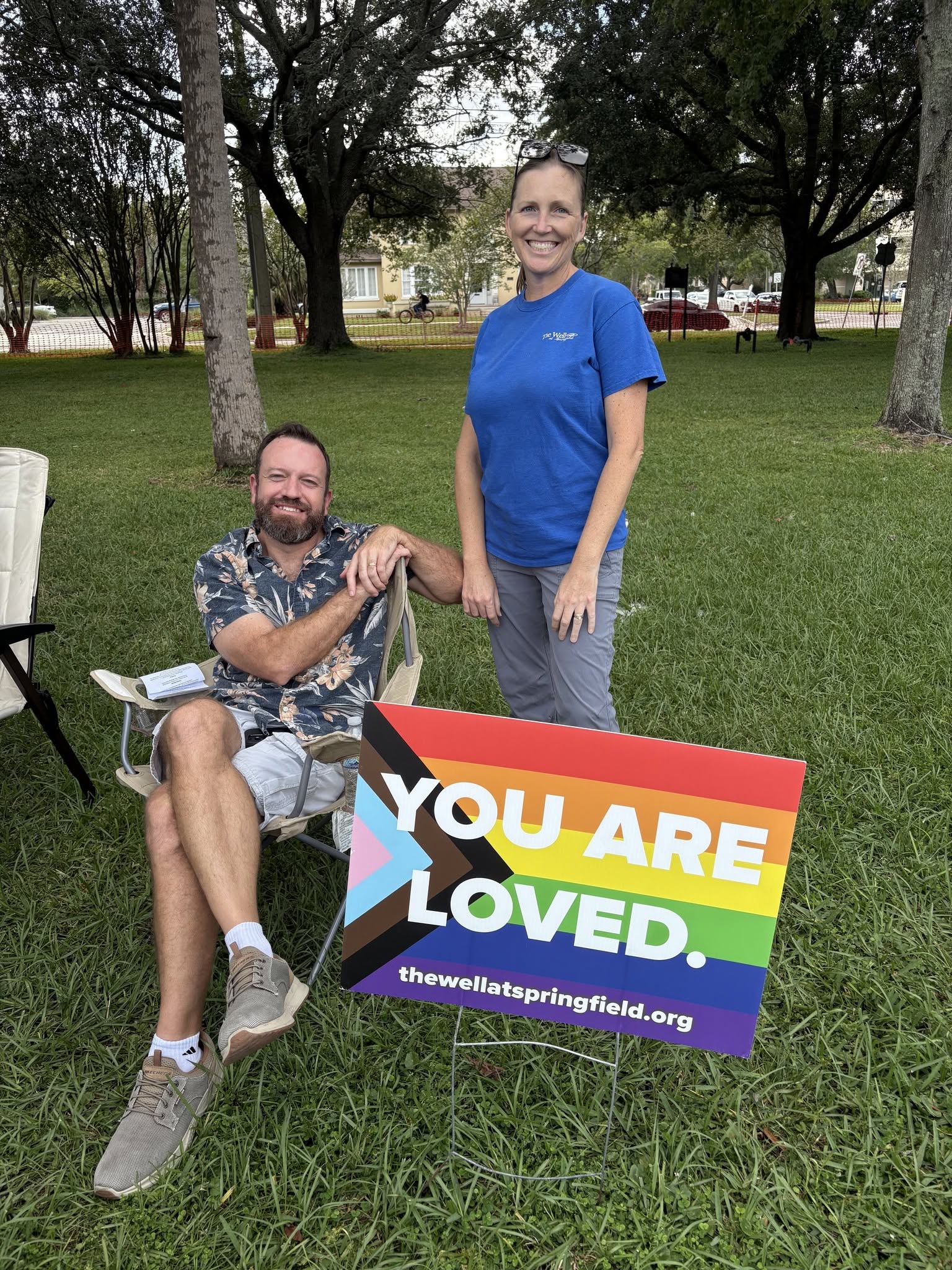
I am most proud that for the past 15 years, I have helped this community create space where people who are LGBTQ+, atheist, agnotistic, struggling with mental health, or struggling to just get by can come as they are, and be seen, heard, loved, and invited to become healthier humans who have a part to play in helping this planet become whole.
Networking and finding a mentor can have such a positive impact on one’s life and career. Any advice?
When I was first starting The Well, I befriended a woman in Denver, CO, who had started a church similar to The Well, and it made all the difference. There are not a ton of women who have started churches in the South – in fact, there are still entire denominations that cling to the archaic belief that women “can’t” be pastors. Having the support of people who have walked this road before, especially other women, has been vital. Attending gatherings of others who are reimagining church has also been super helpful. The Wild Goose Festival, the Inhabit Gathering by the Parish Collective and The Ministry Collaborative are a few of the spaces that have offered connection, inspiration, and support.
Contact Info:
- Website: https://thewellatspringfield.org
- Facebook: https://www.facebook.com/TheWellatSpringfield