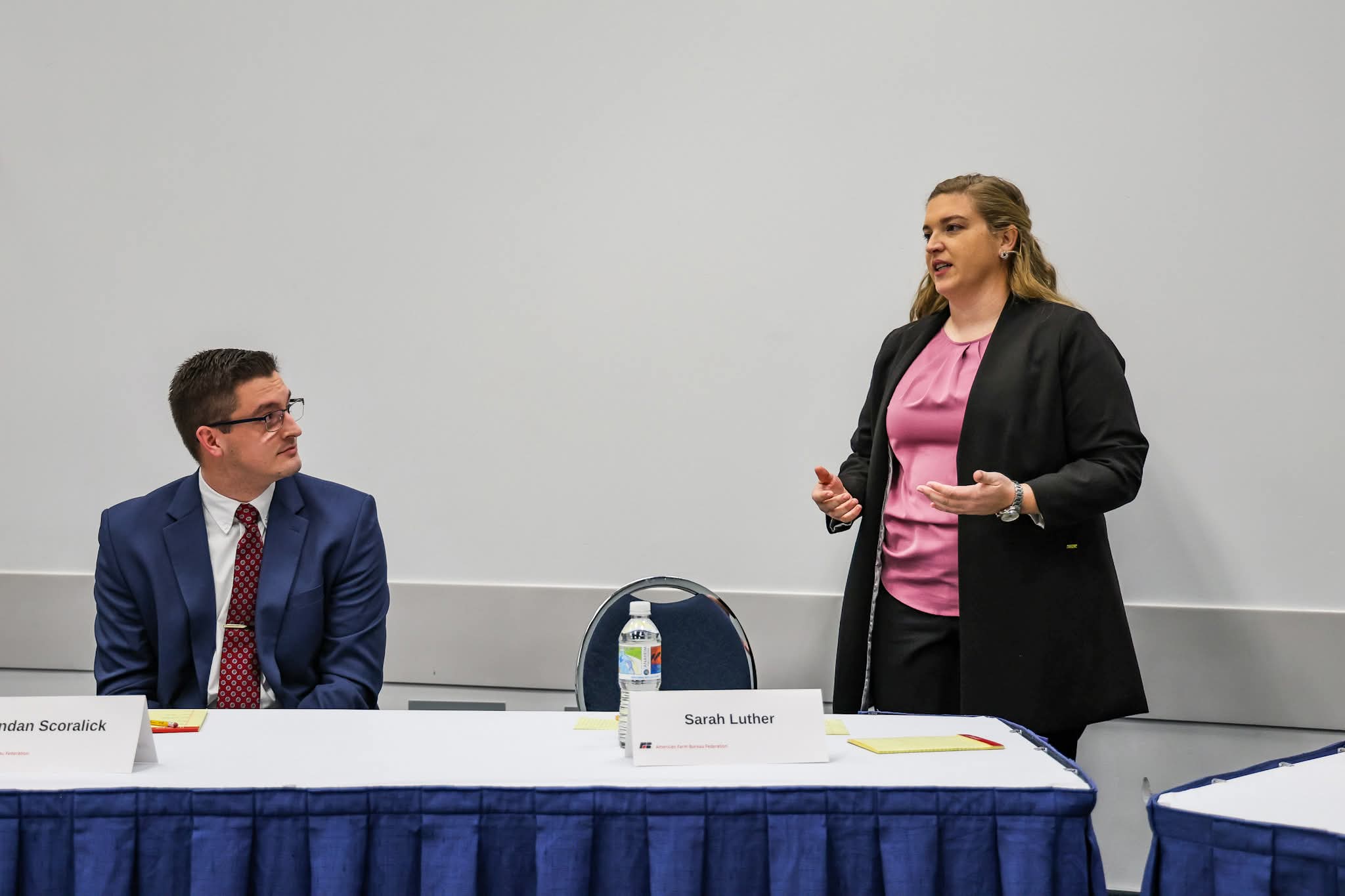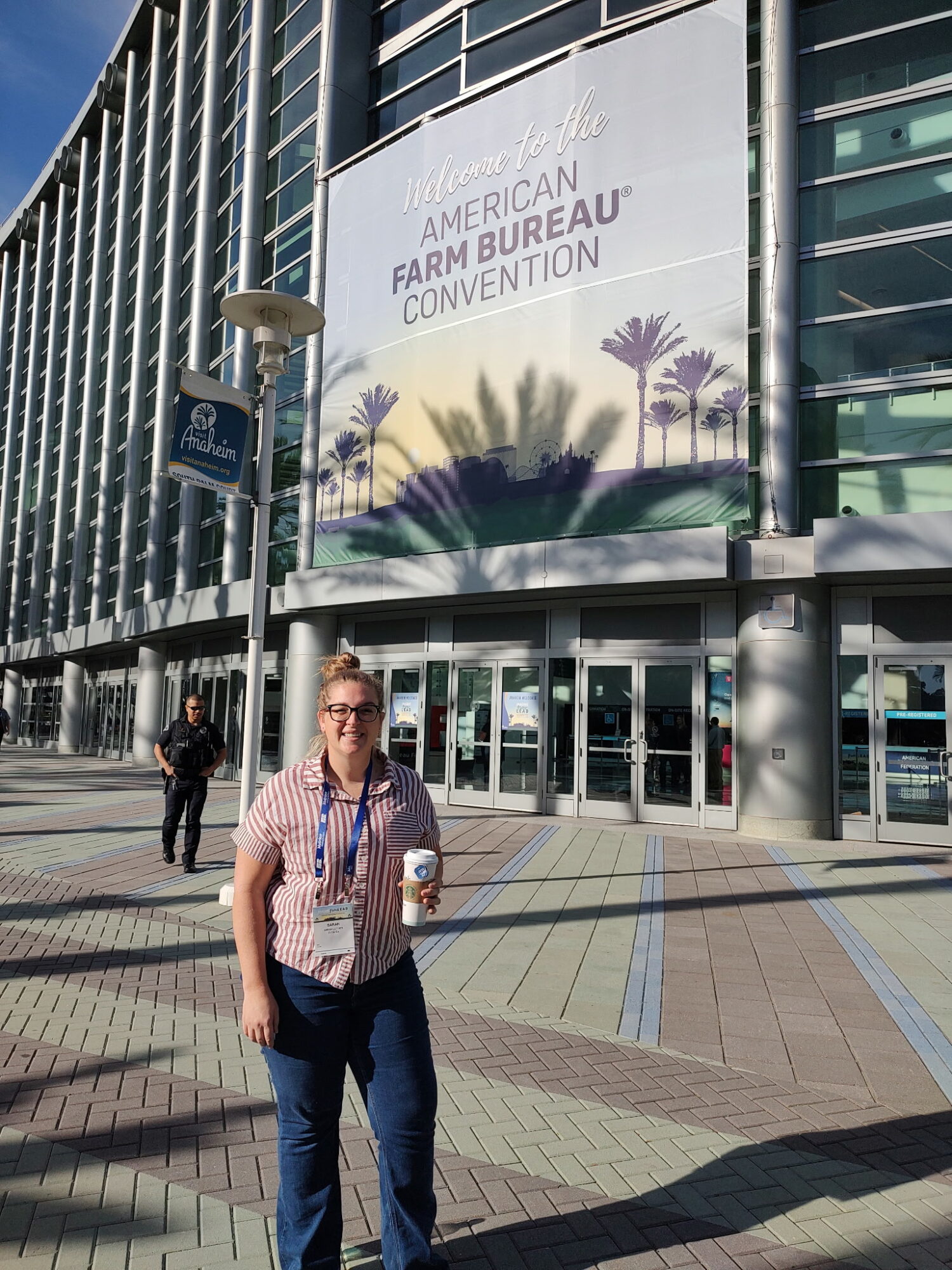




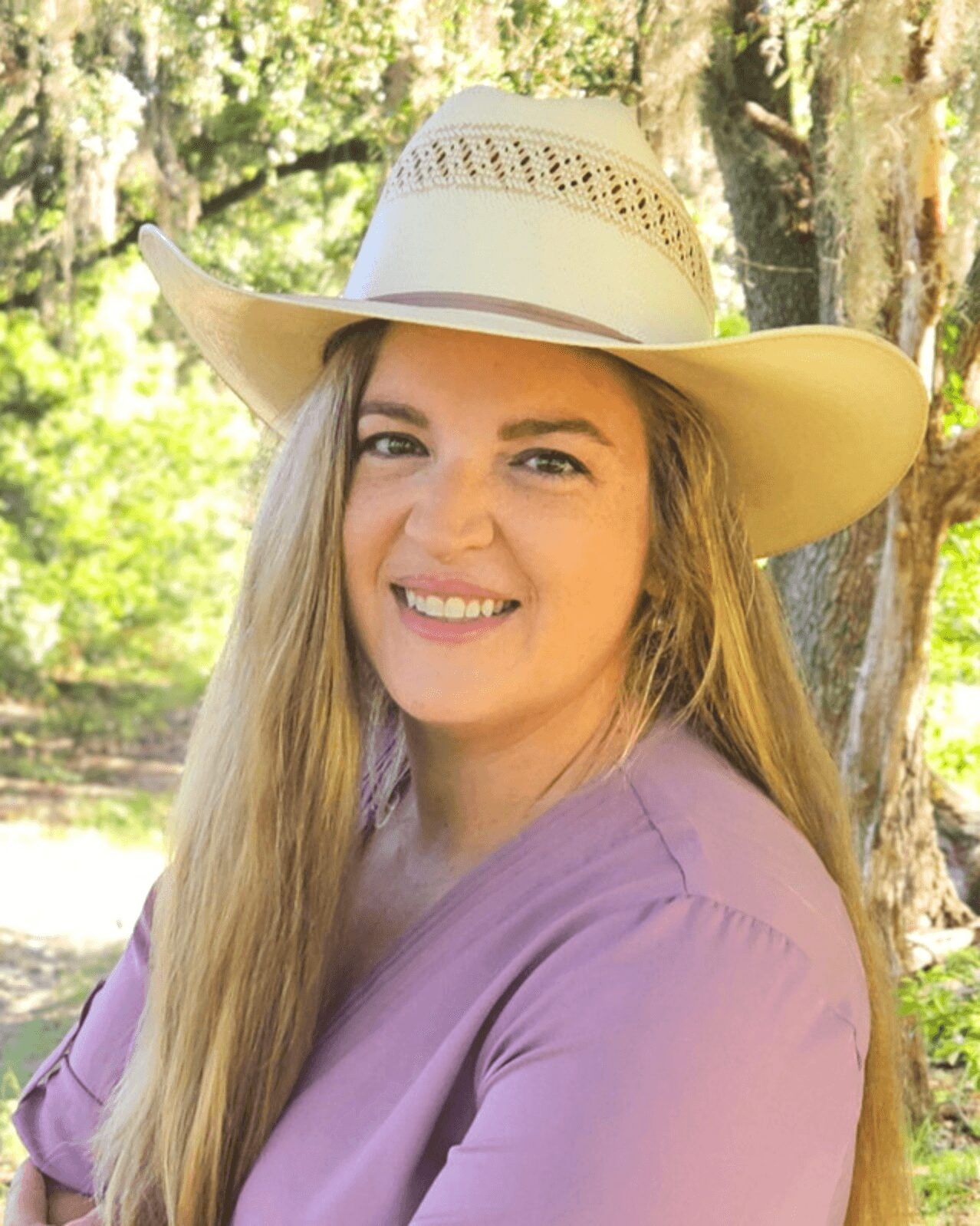
Today we’d like to introduce you to Sarah Luther.
Hi Sarah, please kick things off for us with an introduction to yourself and your story.
I often describe myself as an engineer by training, an attorney by trade, and a cattle rancher by choice. It is a unique toolkit, but every single piece of it was intentionally acquired to defend and build the future of the family farm.
My obsession with agriculture started early on my family’s operation, where raising cattle and training draft horses taught me the values of self-reliance and grit. That passion was tested and deeply shaped by reality when my father suffered a disabling accident and subsequent Parkinson’s diagnosis. The daily physical labor of the farm fell largely to my mother and me. Watching my mother work a full-time career while seamlessly adapting to run a farm provided the ultimate blueprint for my own work ethic.
I knew early on that if I wanted to return to the land and build a herd of my own, I would need a career capable of supporting that ambition and the steep costs of modern agriculture. With those goals in mind, I treated my education as a strategic mission to get back to the farm, earning a Bachelor’s in Agricultural and Biological Engineering, an MBA, and a Juris Doctor.
In 2022, my husband and I took a leap of faith. We relocated back to Florida and purchased a 150-acre property in Waldo, Florida, which we named Braze Ranch. We bought a piece of land that needed a lot of love, and we began building it with sweat equity.
However, as “moonlight farmers” balancing demanding off-farm careers, we quickly ran headfirst into the systemic hurdles facing independent, local producers today. This firsthand experience—combined with my work as an agricultural attorney and our shared passion for land stewardship—ultimately led us to the next chapter of our story: launching Farmstead Direct this fall. It is a permanent retail home for local farmers, designed to change how our community accesses local food.
Can you talk to us a bit about the challenges and lessons you’ve learned along the way. Looking back would you say it’s been easy or smooth in retrospect?
It has been anything but a smooth road—but honestly, we wouldn’t have it any other way. Raising cattle and building a brand from scratch takes a lot of late nights and early mornings, but the progress we see out in the pastures makes the effort entirely worth it.
Our first big challenge was the physical shape of the property itself. When we bought it in 2022, it hadn’t been actively managed in years. The pastures were overgrown with dog fennel, and the fencing was little more than a few rusted strands of barbed wire stapled to trees. Rehabilitating pastures, managing weeds without relying on pesticides, and building permanent cross-fencing is a multi-year project that takes significant time and capital. We have to pace ourselves strategically. Right now, we utilize temporary rotational grazing systems, letting the cattle do the work of building soil health while we save and plan for permanent structural upgrades.
The second major transition was operational. My husband, Ben, spent years working as a merchant mariner, a career that kept him away 75% of the year. To settle down and plant roots here, he made the transition to a local career as the Director of Facilities for LifeSouth Blood Centers, while continuing his service in the Navy Reserves.
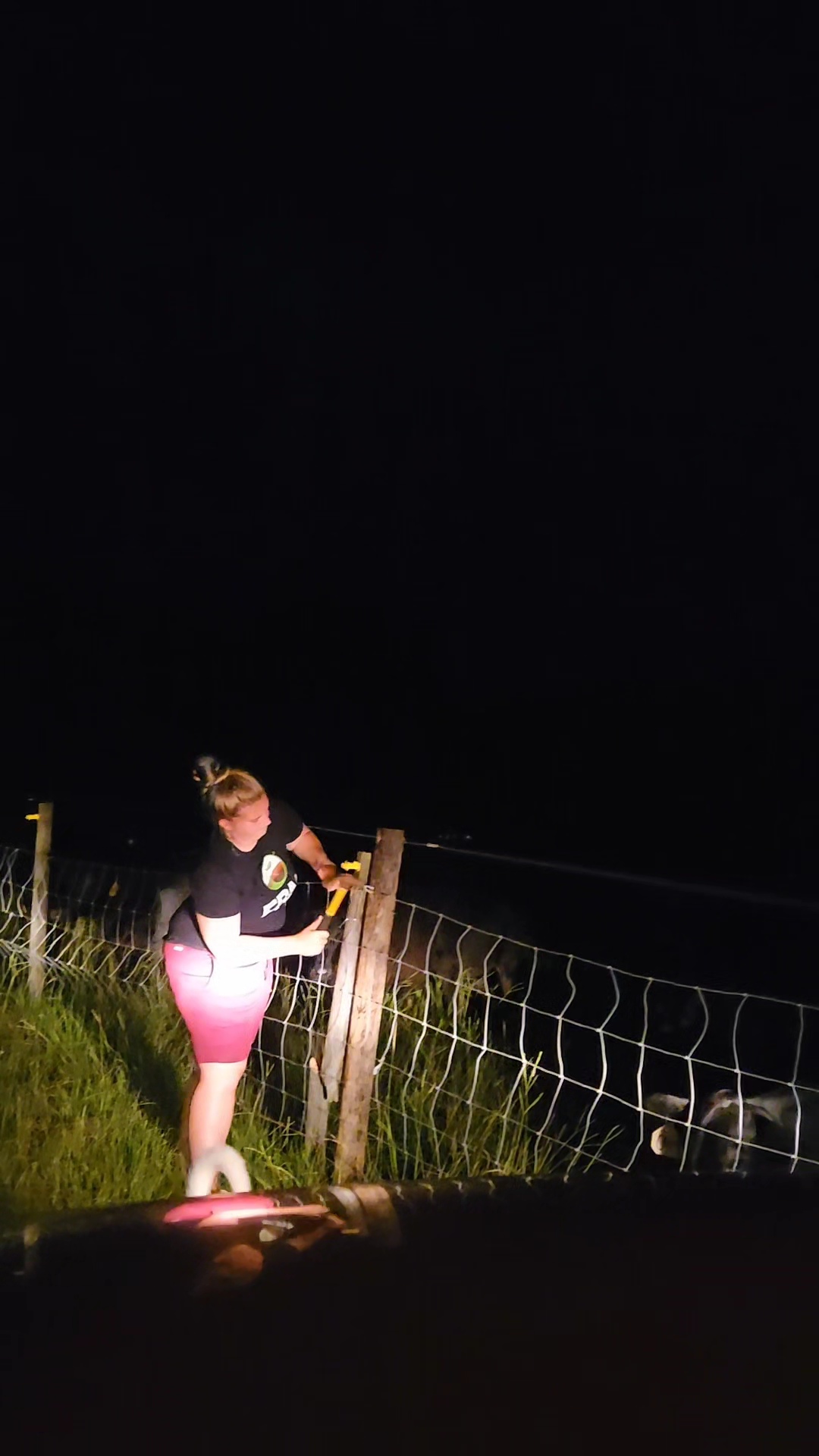
But just as we were finding our footing and getting ready to ramp up operations, Ben was deployed overseas for a year starting in May 2024. Running a 150-acre ranch by myself while working full-time as corporate counsel for an ag-tech company was an exhausting stretch, to say the least. I was incredibly fortunate to have indispensable, hands-on help from family, but the daily load of keeping things moving was still a major test of stamina. Feeding cattle in the dark and checking water lines on my own definitely deepened my appreciation for this land.
Today, we are back to managing everything as a team. When our corporate workdays end, our second shift on the ranch begins. Whether we are rotating cattle through paddocks at sunrise before logging onto meetings, hauling hay in the dark, or fixing a broken water line, we are doing the hands-on work. It is hard, dirty, and unpredictable. But we do it because we love the lifestyle, and we are incredibly proud to be building something that directly supports our community.
Great, so let’s talk business. Can you tell our readers more about what you do and what you think sets you apart from others?
We operate two closely integrated businesses that share a single mission: bringing honesty, stewardship, and reliability back to local food.
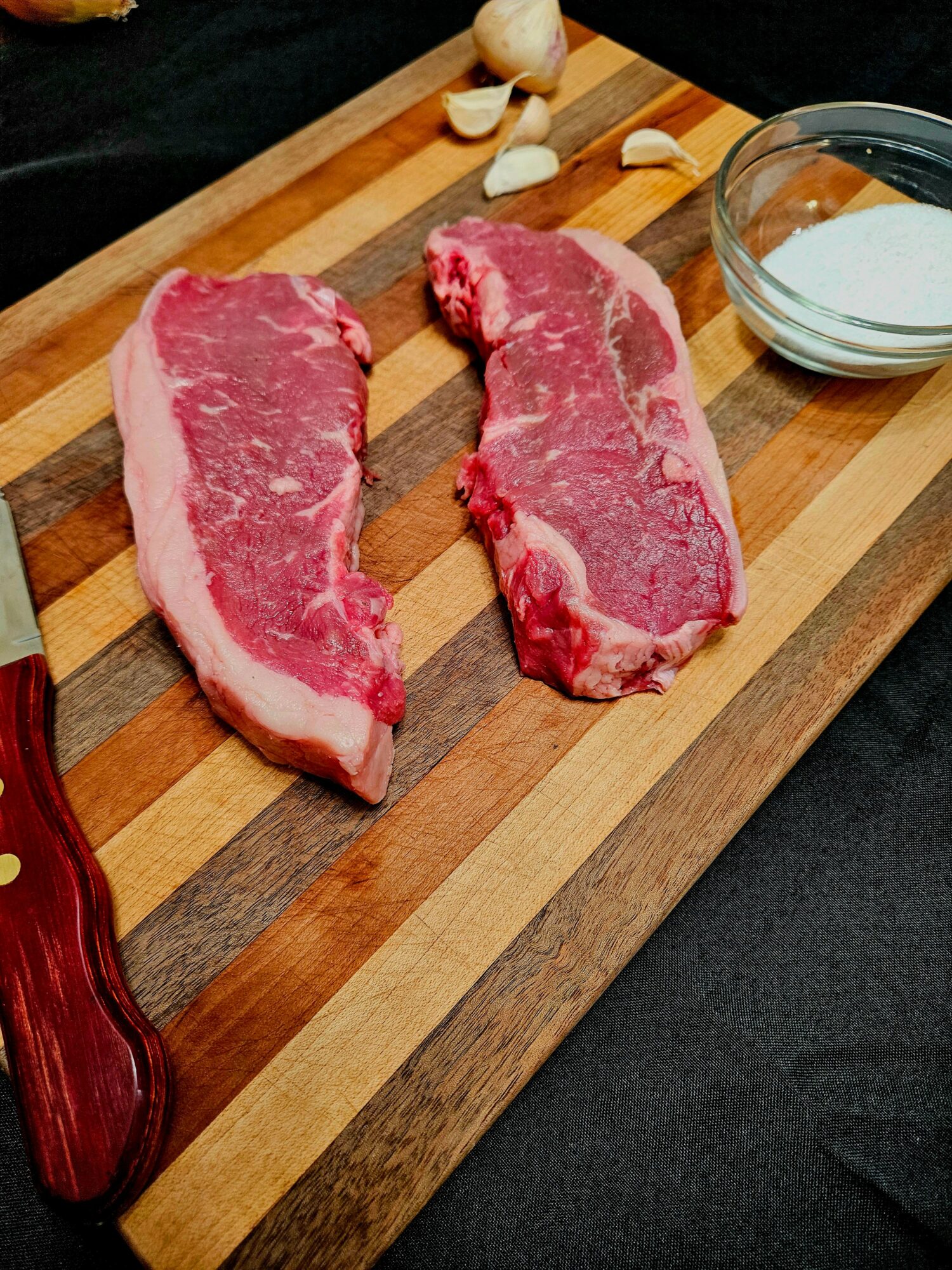
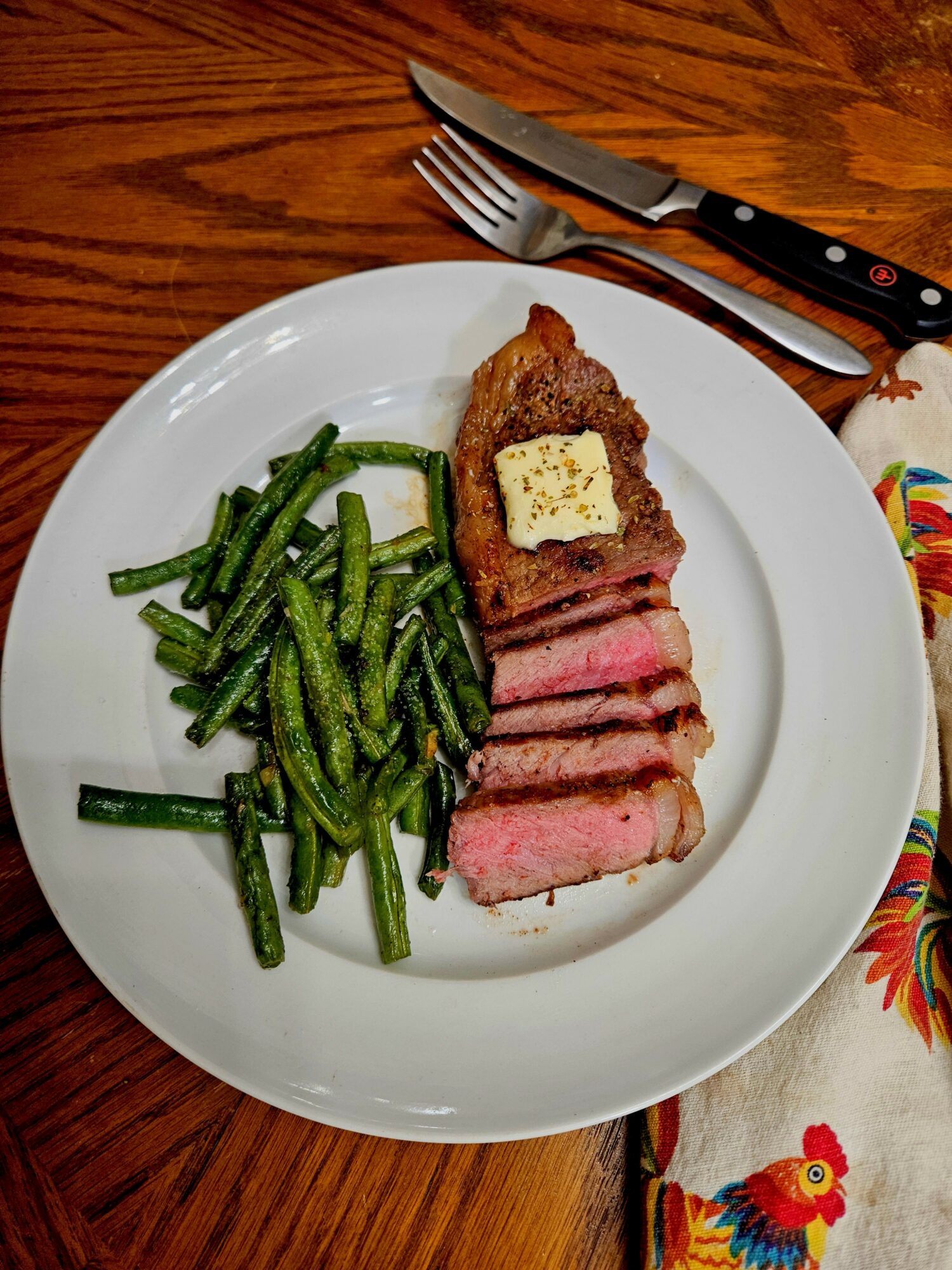
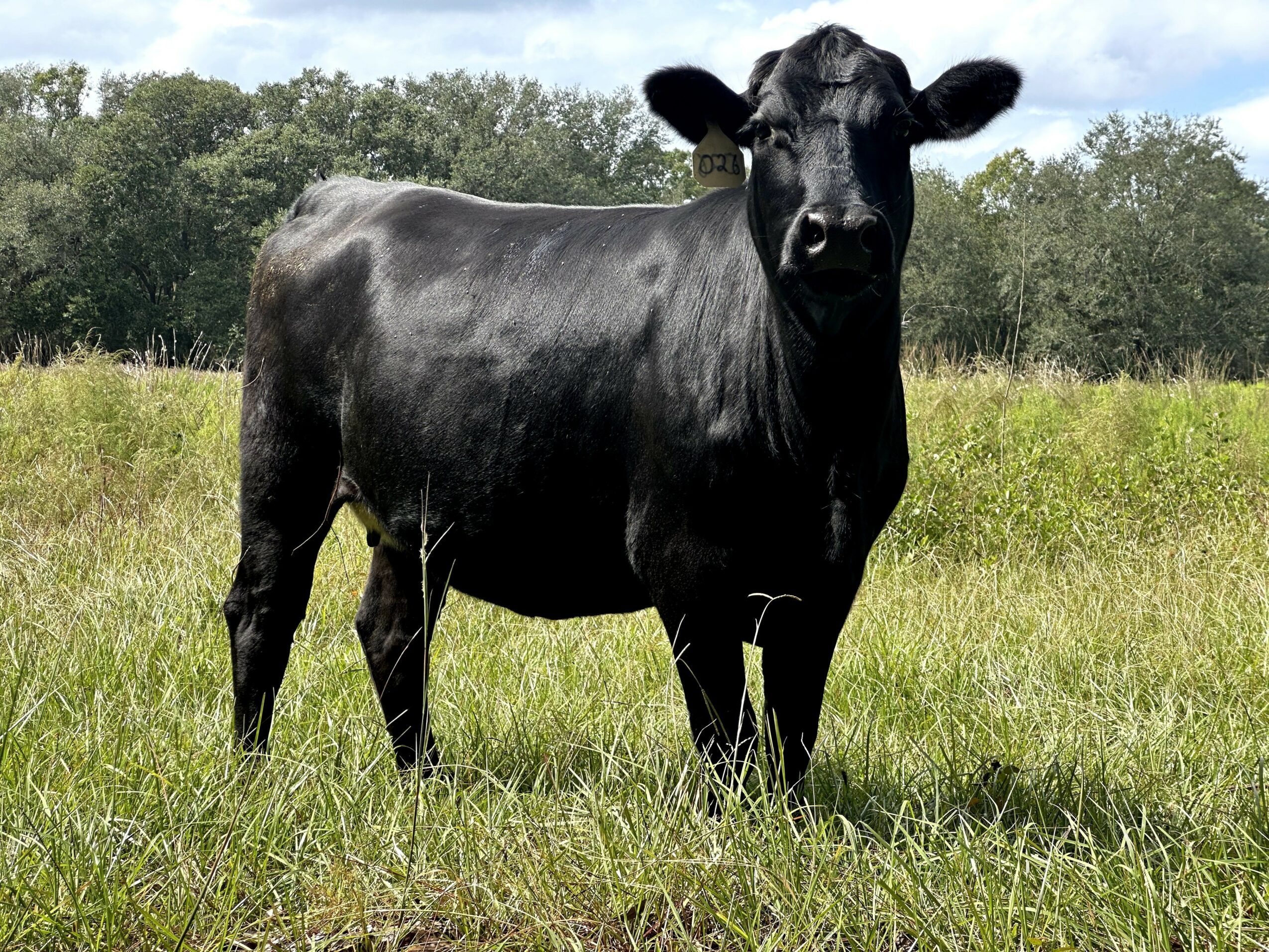
At Braze Ranch, we raise grass-fed, grain-finished Angus-Wagyu beef and pastured poultry with a “grass-first” regenerative philosophy. We combine traditional animal husbandry with soil science, focusing on long-term ecological health over short-term gain. When you buy our beef, you are getting premium, pasture-raised protein direct from a family ranch that prioritizes animal welfare and land rehabilitation.
This fall, we are taking that commitment to the next level by launching Farmstead Direct.
Farmstead Direct is a year-round, indoor, permanent retail “Farm Stop” located right along the high-traffic US-301 corridor in Waldo, directly adjacent to Braze Ranch. It is explicitly designed to bridge a frustrating regional paradox: Alachua County is an agricultural powerhouse, generating over $146 million in agricultural products sold annually, ranking 13th in Florida for beef and 4th for forage. Yet, despite this incredible bounty growing right in our backyards, corporate grocery closures on our side of the county have isolated our community. Our neighbors in Waldo and East Alachua have been forced to rely on local convenience stores and dollar stores for daily meals, or drive into Gainesville just to buy fresh groceries.
Farmstead Direct solves this access gap. Our pasture-raised Braze Ranch Angus-Wagyu beef serves as the retail storefront’s anchor product. In fact, customers standing in our shop can look right out the window and see the very cattle grazing in the fields.
Alongside our beef, we will carry pantry staples from other local producers—including milk, seasonal produce, and honey. We aren’t trying to be a traditional big-box supermarket; you won’t find paper towels or plastic wrap on our shelves. Instead, we want to be the place our neighbors stop first. If they can get their fresh proteins and seasonal produce from us, they have complete peace of mind about the core of their dinner, and they can easily grab their non-local household items at the supermarket later.
What sets us apart is our consignment-style business model. Under conventional retail systems, farmers capture less than 16 cents of every retail food dollar. At Farmstead Direct, local farmers simply drop off their goods, set their own prices, and keep 70% of the retail price, while we handle the staffing, licensing, refrigeration, and marketing. We are proud to be building a destination where local isn’t just a marketing buzzword on a label; it’s the literal view out the window.
Where do you see things going in the next 5-10 years?
The agricultural industry is currently trapped in a systemic time-versus-margin crisis that is forcing a massive shift in how the next generation of farmers operates.
Over the next decade, we are going to see a dramatic acceleration of the “Moonlight Farmer” phenomenon. According to the USDA, over 60% of US producers now rely on an off-farm career as their primary occupation to service land mortgages and modern input costs. Young farmers want to steward the land, but they are forced to work corporate jobs to keep their operations solvent, leaving only nights and weekends for actual farm management.
To survive, the industry must pivot toward direct-to-consumer sales to capture higher margins. However, the traditional methods of direct selling are broken. The standard, transient weekend farmers’ market is a direct path to burnout. It demands that a time-poor producer sacrifice 8 to 10 hours of premium daylight sitting at a market stall, packing, and traveling, without any guarantee of a sale.
Over the next 5 to 10 years, the survival of the family farm will depend on localized logistics and aggregated retail infrastructure.
We need to move away from high-mileage, consolidated corporate supply chains and build decentralized, regional food hubs. That is the exact trend we are pioneering at Farmstead Direct. We are proving that by offering a permanent, year-round retail space with professional cold storage and a simple drop-and-go model, we can give farmers their time back so they can focus on farming, while still returning more than quadruple the national average share of the food dollar directly to their pockets.
Ultimately, the future of agriculture isn’t in massive, corporate-owned monocultures or transient roadside stands. The future belongs to smart, decentralized networks of local food hubs that use modern efficiency to protect the independent producer, restore economic vitality to rural towns, and guarantee real food security for our neighbors.
Contact Info:
- Website: https://farmstead.direct
- Instagram: @farmsteaddirect
- Facebook: https://facebook.com/farmsteaddirect
- Other: Braze Ranch is @brazeranch brazeranch.com facebook.com/brazeranch