




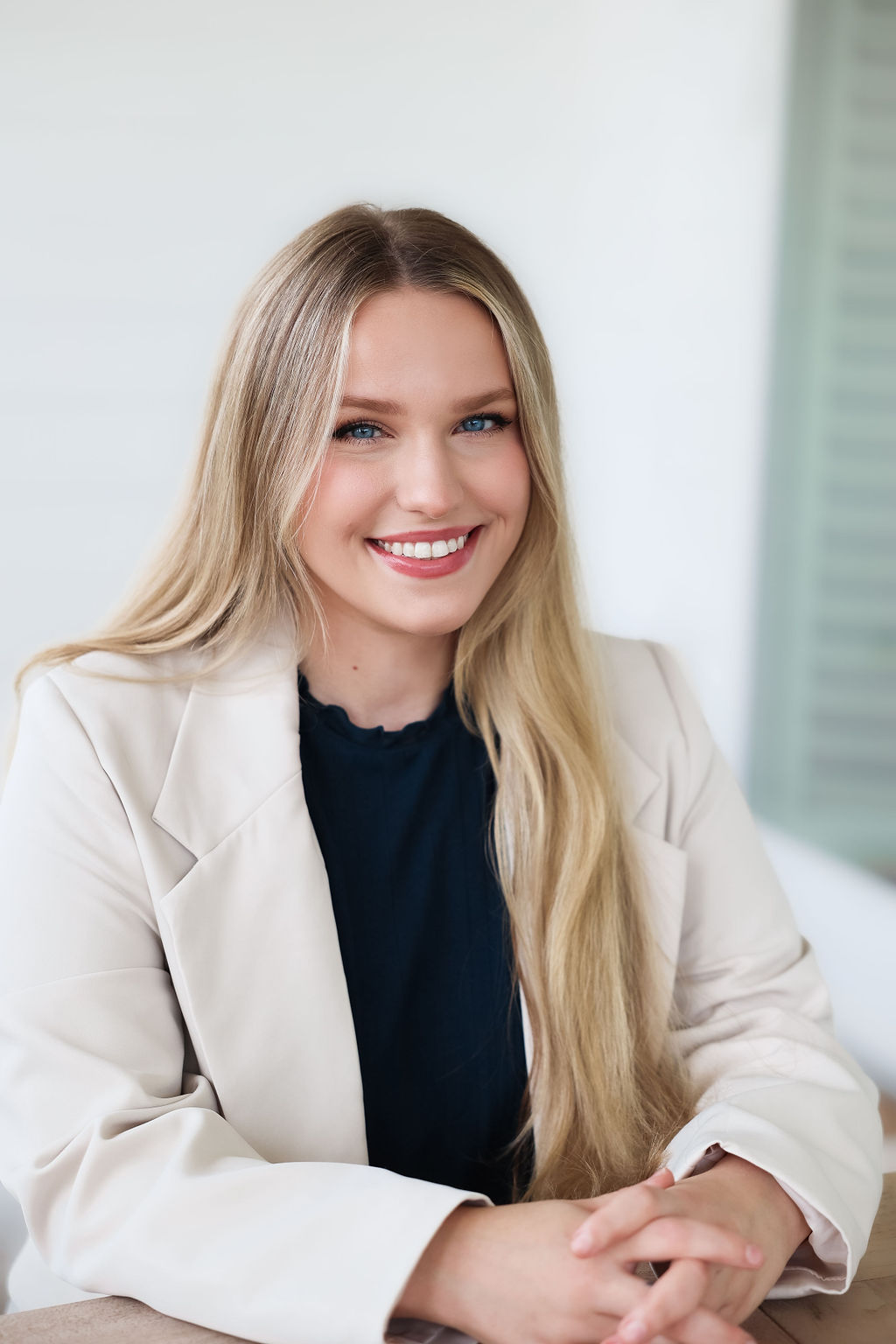
Today we’d like to introduce you to Natalie Novak.
Hi Natalie, can you start by introducing yourself? We’d love to learn more about how you got to where you are today?
I grew up in Cary, Illinois, and as a kid I was always interested in the arts because it was one of the places where I felt like I succeeded. One of my earliest memories is winning an award in Chicago for a drawing I did for a calendar cover when I was six years old. My parents still talk about it to this day.
As someone with ADHD, art made sense to me. Learning was easier when I could see things and use my hands. In high school, I started taking more art classes, and it was really my art teachers who inspired me to pursue Art Education.
I went to the University of Illinois Urbana-Champaign, where I earned my BFA in Art Education and a minor in Art History. During college, I taught in a variety of elementary, after-school, and high school settings with students from different backgrounds and experiences. At the same time, I was taking upper-level studio classes in painting and drawing. Toward the end of college, I started to discover my artistic identity, and I realized I saw myself as an artist first and educator second. I felt that pursuing my own path as an artist would also make me a better teacher.
That led me to the University of Florida, where I earned my MFA in Studio Art with a concentration in Painting and Drawing, along with a Graduate Certificate in Women’s Studies. My background in art history made me curious about how women have been represented throughout painting, and my work began to expand into textiles, sculpture, and installation as a way of imagining new possibilities for representation.
One of the most influential experiences I had during graduate school was studying at Arrowmont School of Arts and Crafts as a Windgate Fellow. That was where I learned how to sew and build inflatable sculptures, which completely changed my practice and opened up new ways of thinking about materials.
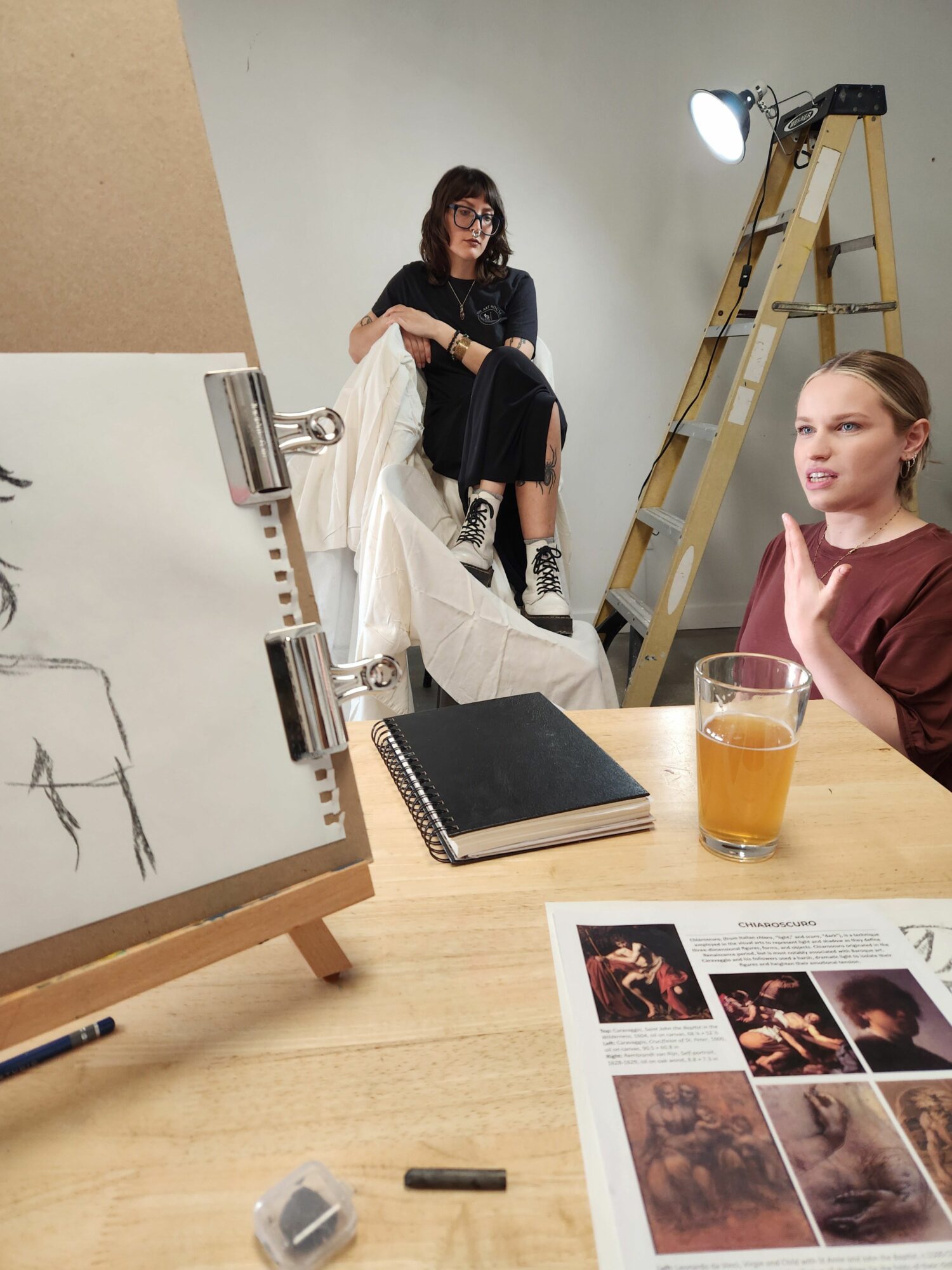
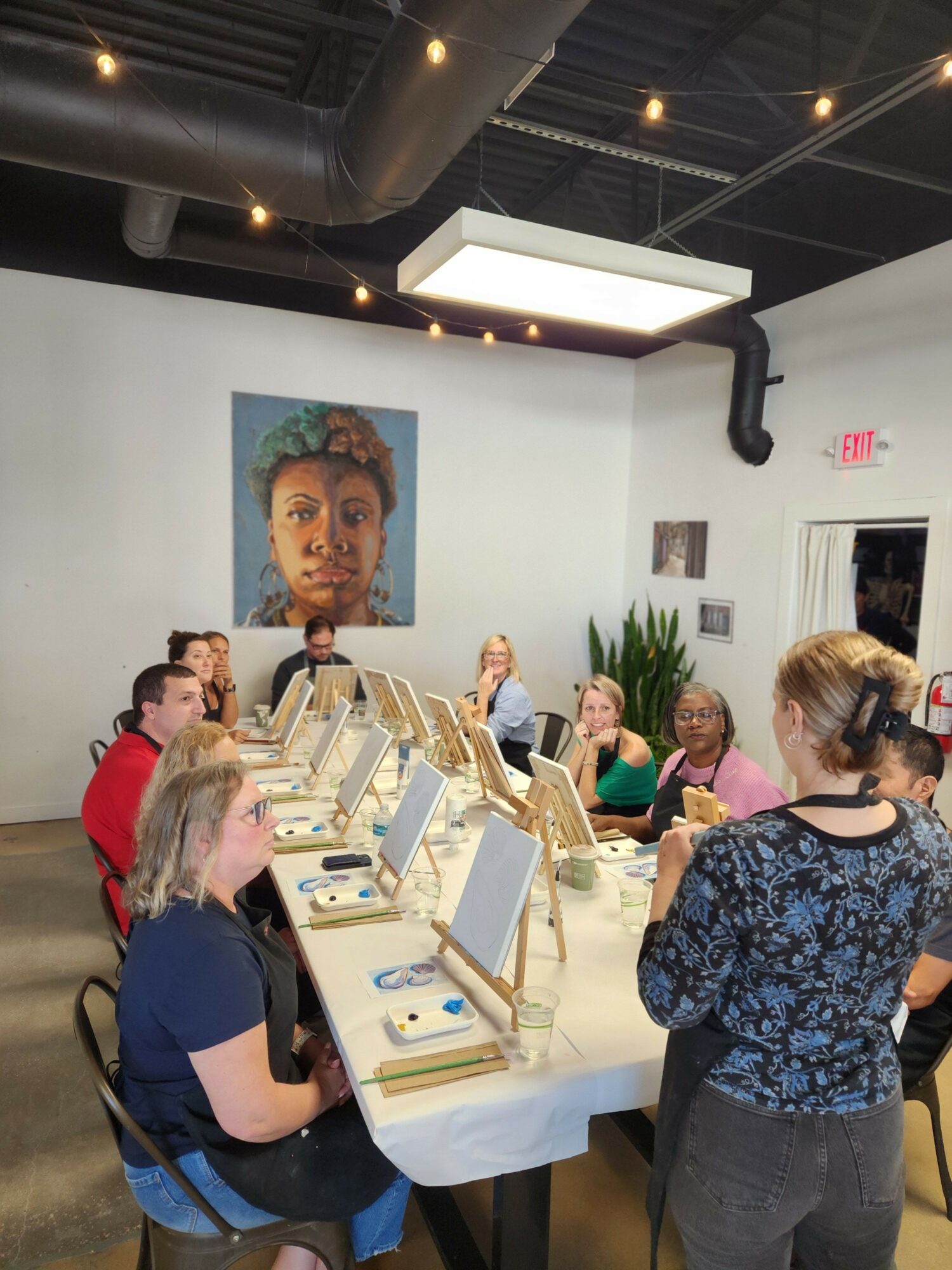
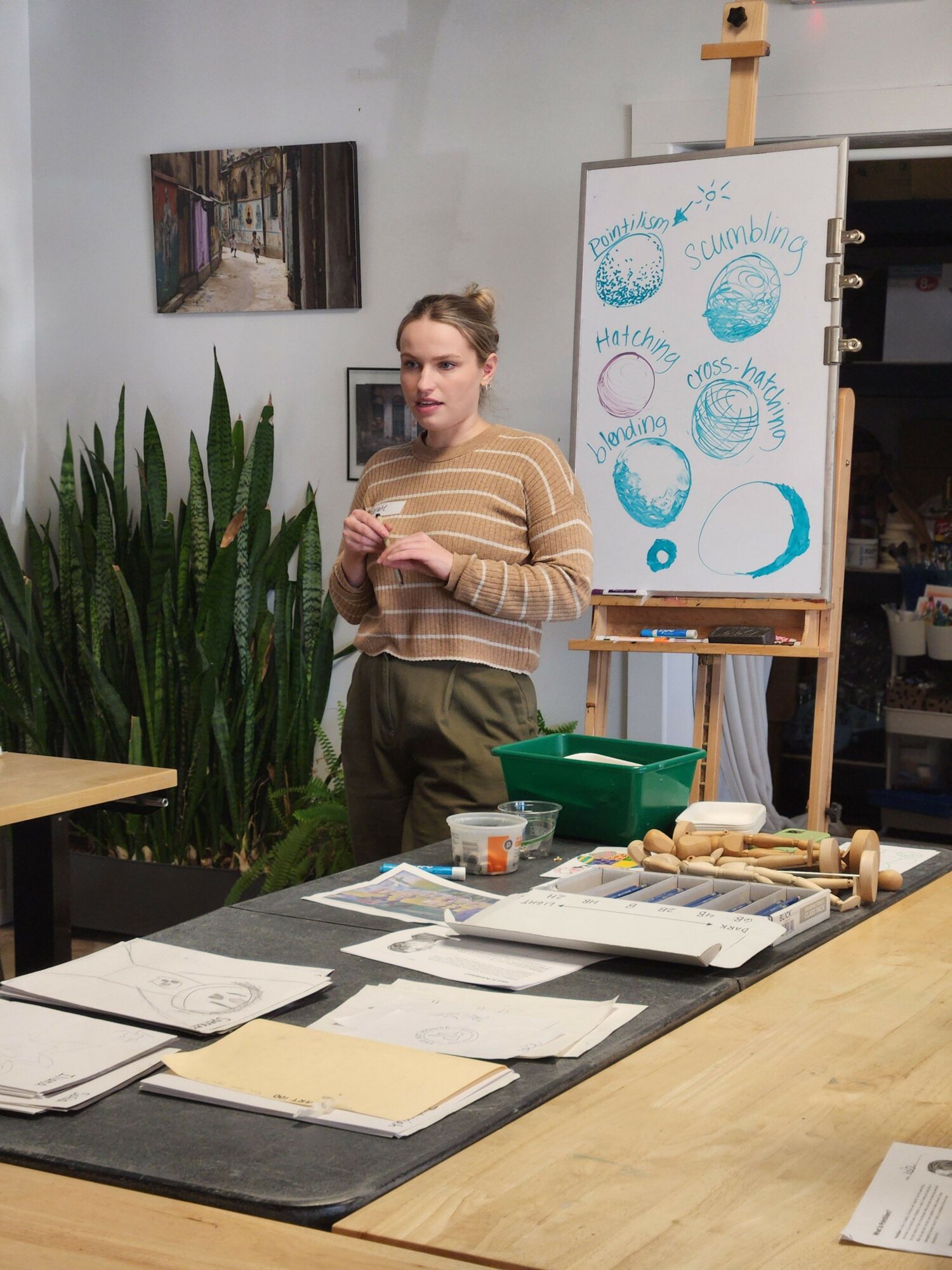
After graduate school, I worked as the Artist-in-Residence at the University of Wisconsin–Green Bay, where I taught Introductory Drawing, Intermediate Painting, and Advanced Painting, and had my first solo exhibition. Currently, I teach in the Core Curriculum and Visual Arts Department at Flagler College. One of the courses I teach is called Crafting Democracy, where students explore the role of art and craft in social movements while creating projects and campaigns around issues they care about. I’m also a Lead Instructor at The Art House, where I work with students of all ages. I currently teach the Kids Fine Art Series, Adult Watercolor Foundations, and Adult Intermediate Watercolors, in addition to leading monthly painting and drawing workshops, private events, and one-on-one lessons.
Being an artist who teaches in a lot of different contexts constantly challenges me and makes me see my work differently. The things I learn in the classroom influence my studio practice, and the things I do in my studio make me a better teacher. I don’t really see those as separate parts of my life. They’ve always informed one another.
Would you say it’s been a smooth road, and if not what are some of the biggest challenges you’ve faced along the way?
It definitely hasn’t been a smooth road, and pursuing a creative career has come with doubts, not only within myself but also from other people. But I really can’t imagine doing anything else.
School was challenging at times, but I always did well in subjects that were visual. However, I often had to work harder and longer to stay organized and focused in more traditional learning environments. Art class was a place where I felt capable and confident, which is part of why it became such an important part of my life.
One of the biggest challenges I faced was during graduate school. I went into my MFA thinking I had a pretty clear idea of what kind of artist I wanted to be, but once I got there, a lot shifted for me both artistically and personally. At one point during my third and final year, I felt completely lost. I was surrounded by confident artists who seemed like they knew exactly what they were doing, and I started questioning my work, my ideas and direction, and whether I even belonged there. There was a period where I felt stuck and like I wasn’t making progress, and I seriously considered quitting the program. At the time, it was especially stressful because I knew I wanted to pursue teaching in higher education, and an MFA was necessary to do that.
To get through that experience, I had no other choice but to learn how to ask for help. Up until that point, I tried to figure everything out on my own and put on a brave face until I couldn’t anymore. A family member encouraged me to have a conversation with my thesis advisor and be honest about where I was struggling. My advisor met me where I was at, and she reassured me that I could do this. She helped me understand that not having all the answers didn’t mean I was going to fail.
Looking back, that experience changed how I approach teaching. I know how it feels to doubt yourself and wonder whether you’re capable of doing something. Because of that, I try to create a learning environment where students feel comfortable asking questions and admitting when they need support.
After graduate school, one of the biggest challenges has been navigating a career path that doesn’t have a clear roadmap. Right now, I’m teaching at multiple institutions, along with making work, writing proposals, applying for residencies and exhibitions, and trying to maintain some kind of work-life balance. I’ve had opportunities that didn’t work out, applications that were ghosted, and still at times I question what the next step would be. I still have a lot of growing I want to do professionally.
Alright, so let’s switch gears a bit and talk business. What should we know about your work?
I’m a multimedia artist and educator working primarily in painting and drawing, but my practice expands into textiles, sculpture, and installation. A lot of my work starts with questions around representation, especially how women and girls have historically been portrayed in Western art history, and how that can be expanded into something more complex, embodied, and open to promote agency.
I’m really interested in material as a way of thinking. Instead of just using paint in a traditional sense, I move between materials like fabric, stitching, drawing, and constructed forms to build imagery that is layered and physical, not just surface-based. I think of my work as existing somewhere between image, object, and being.
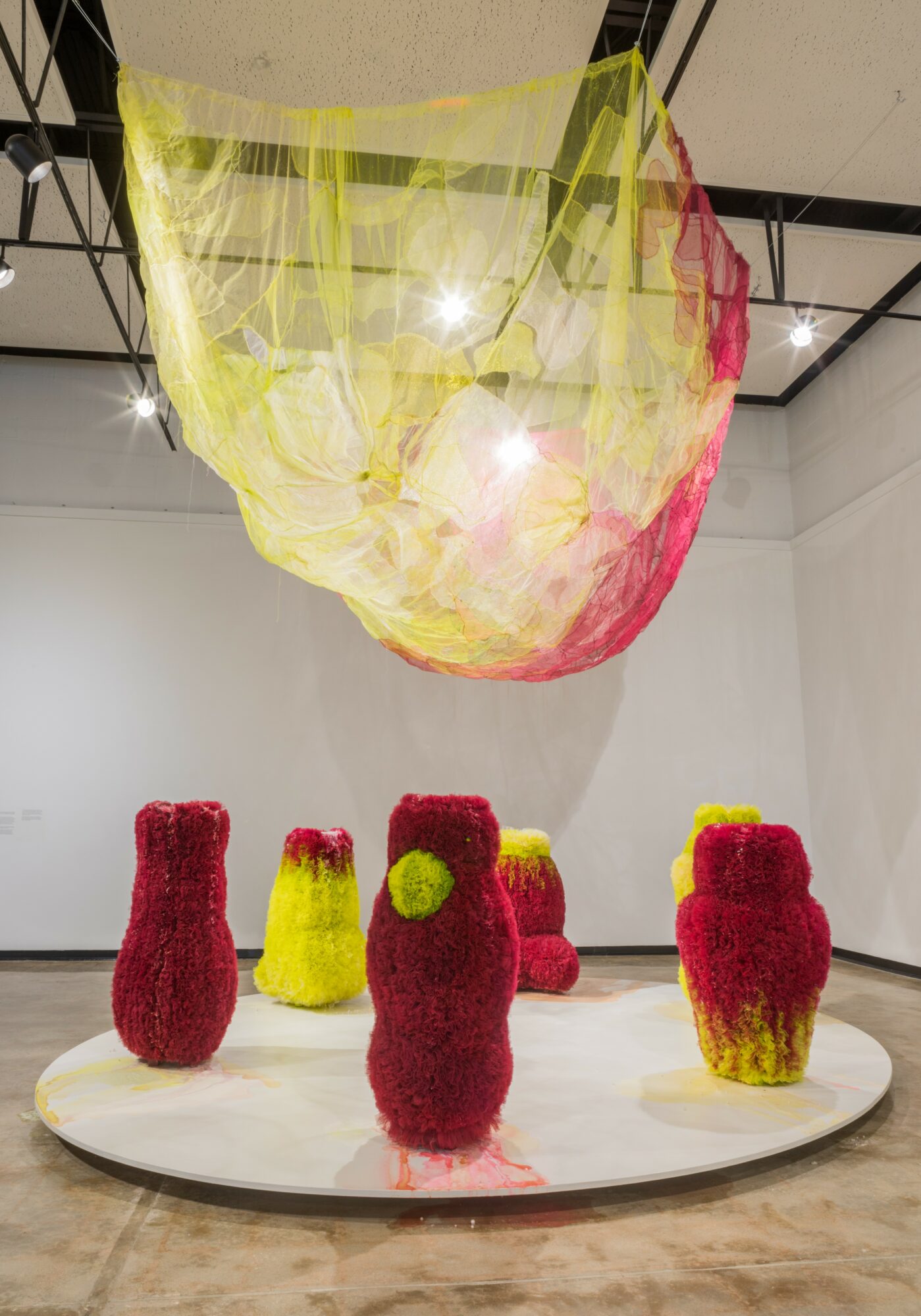
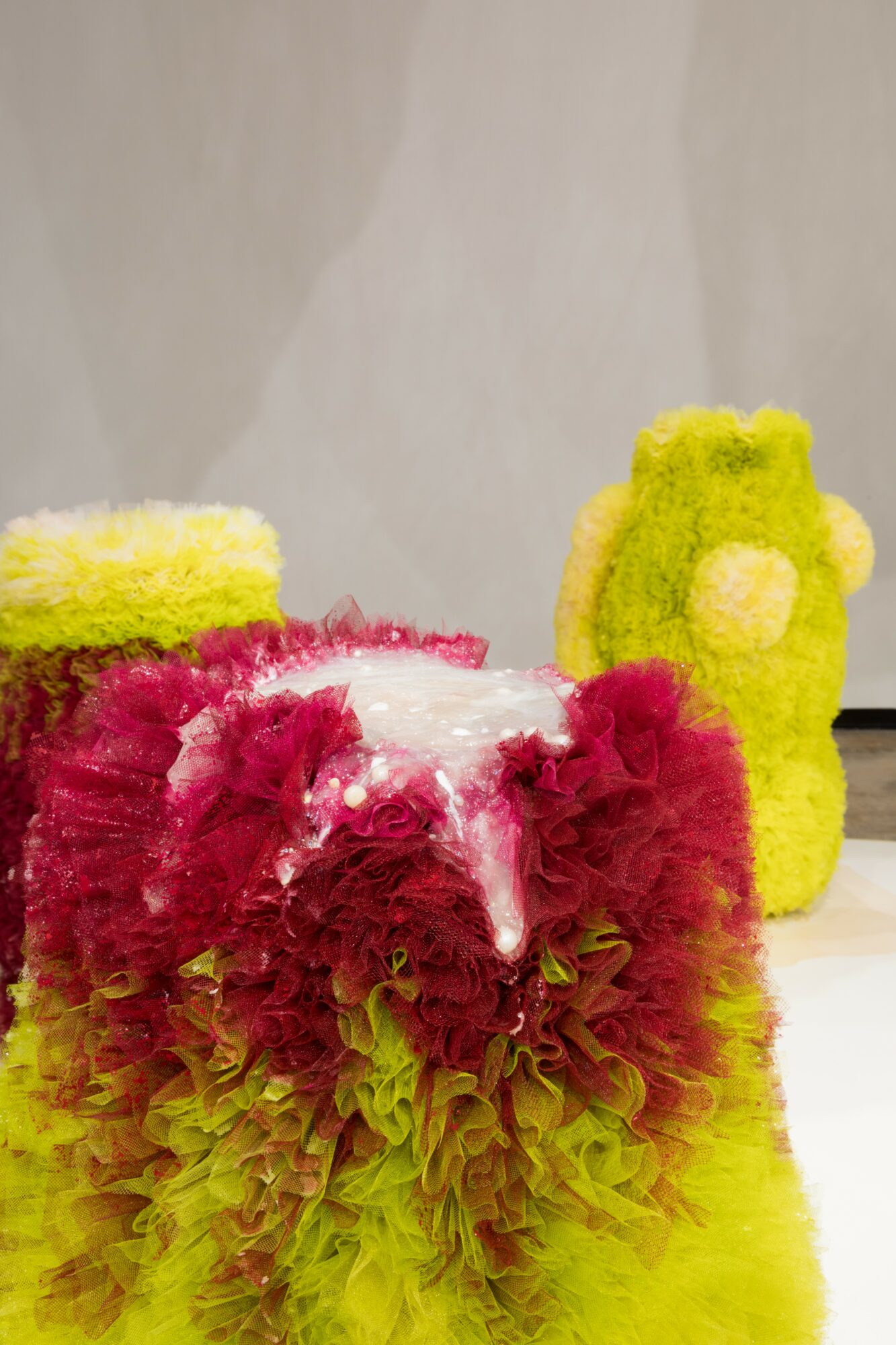
For example, I often use tulle, which is a soft but stiff netted fabric used in ballet costumes. As a former dancer, I was always drawn to ballerinas but also aware of the discipline and control behind that image. I take layers of tulle, bathe them in acrylic paints, and stitch them by hand to create what I think of as formless bodies that exist in space. The light passes through the fabric and casts stitched shadows on the walls, so the work also becomes a kind of ephemeral drawing.
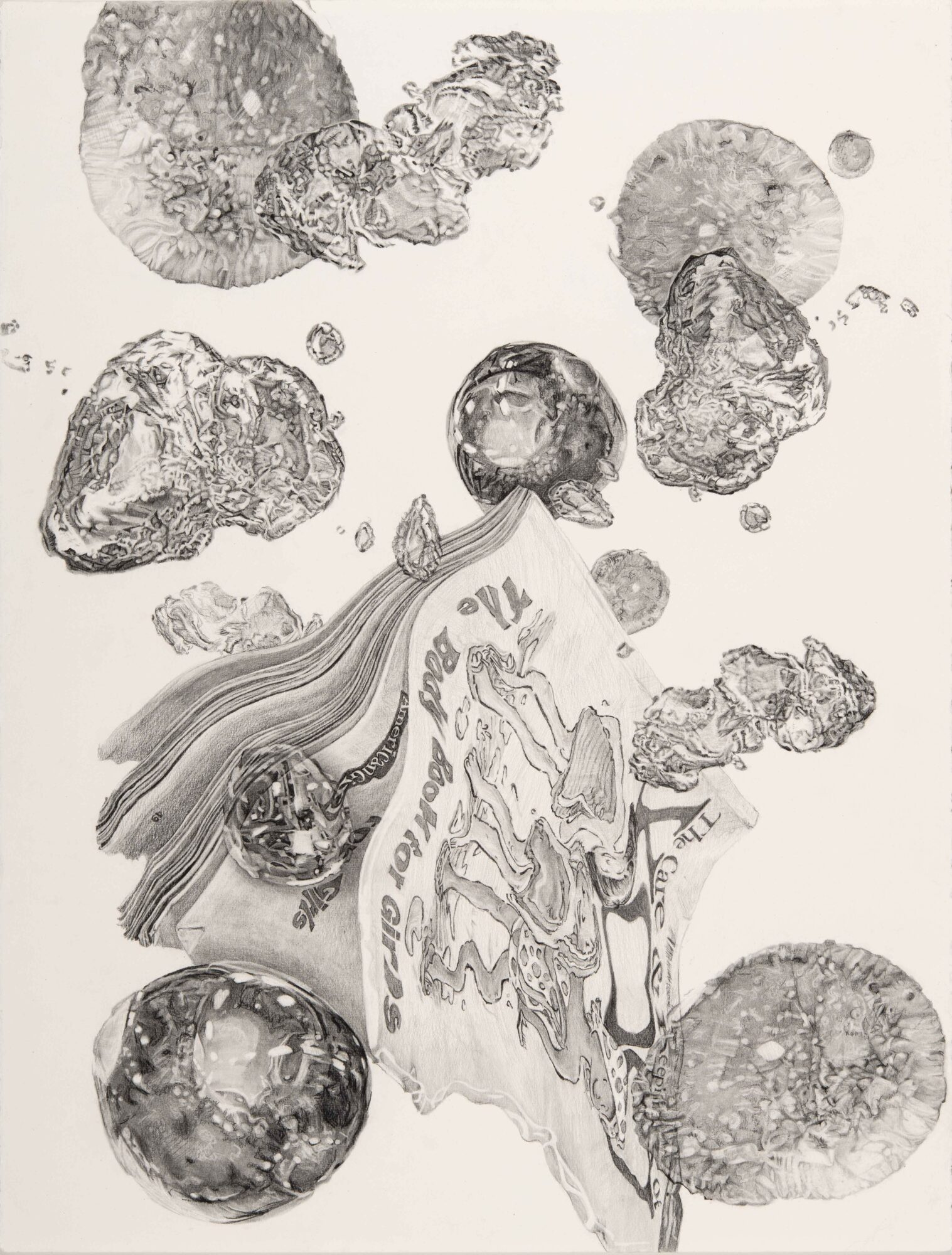
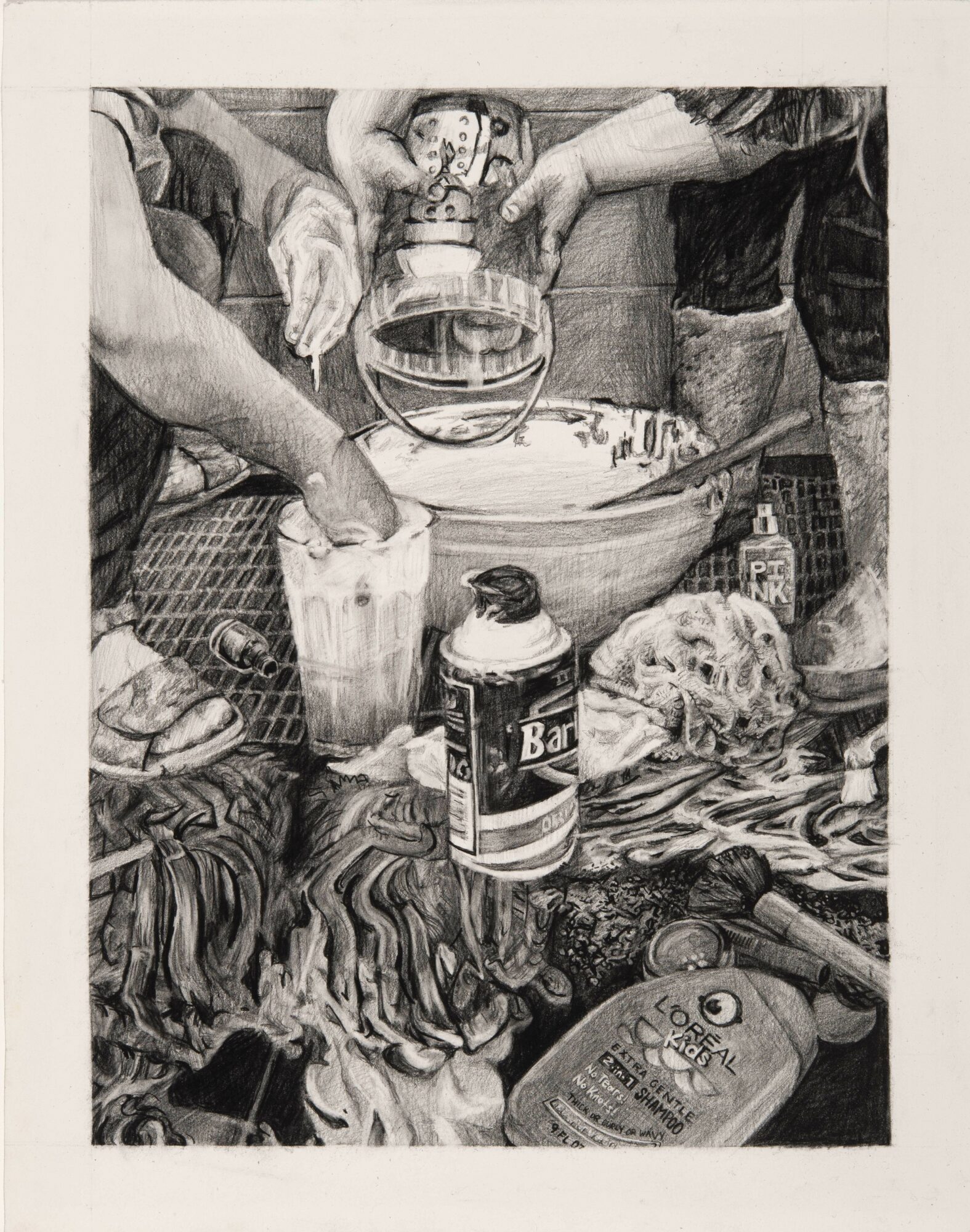
I also created a series of graphite drawings that pull from childhood objects and early constructions of femininity. Things like the American Girl doll, ballerina music boxes, and moments like mixing “potions” from bathroom products during sleepovers. I remix these images to think about how I was learning ideas of control, autonomy, and identity at a very early age, often without realizing it. I’m also interested in free-floating as a metaphor for resistance to expectation, so some works place these objects in zero gravity or reference imagery from NASA experiments of liquids in space, pairing them with girlhood objects to think about femininity as something that can be ungrounded, expansive, and unresolved.
I don’t know if I’m known for one specific thing, but I do think people respond to my use of materials that resist permanence. I’m drawn to things that shift, dissolve, refuse to stay fixed. I’ve worked with mixtures of self-care products and pigments that become unstable over time, especially in my inflatable works, where the material itself changes as it reacts to the environment. The work isn’t the final object, but the experience of the transformation of material over time.
I also think people connect to my drawings when they trigger a kind of memory or recognition from childhood. For example, in my drawing, The Care and Keeping of Goo (Zero Gravity), I reference the American Girl Doll book, The Care & Keeping of You (1998), which was widely read by my girls of my generation. I edit that imagery so the book is slightly melting as it floats among ambiguous liquids, which something that is both humorous and slightly unsettling.
What I’m most proud of is that my teaching and studio practice are connected. I’ve been able to work across higher education and community spaces in both my teaching and making. That’s also why I’m really drawn to The Art House and what Melissa Noeth, the founder, has built there. The mission of creating community through art, education, and events aligns with how I already work. I value that it’s a space that’s welcoming and open to people of all ages and backgrounds, where they can come in, feel comfortable creating, try something new, and connect with other people through art. I didn’t always have spaces like that growing up, so being able to help create that for other people means a lot to me. Making art feel accessible and not intimidating is a big part of my “why” as both an artist and educator.
Can you talk to us a bit about happiness and what makes you happy?
When I think about what makes me happy, I immediately think about my 4-pound dog, November. After a long day at work or just working on my own work, she’s the thing that refuels me and brings me back down to earth.
I try every day to communicate with her and I just want to know what she’s thinking! There’s something really grounding about being around animals. She doesn’t know anything about deadlines or expectations or any of the things that take up space in my head.
I think that curiosity and care I have for animals in general is part of what keeps me happy. It pulls me out of my own thoughts and back into something simple and present.
Contact Info:
- Website: https://www.natalienovakart.com/ and https://www.904arthouse.com/
- Instagram: https://www.instagram.com/natalienovakart/ and https://www.instagram.com/904arthouse/
- Facebook: https://www.facebook.com/904arthouse/
- LinkedIn: https://www.linkedin.com/in/natalie-novak-325137186
- Yelp: https://www.yelp.com/biz/the-art-house-st-augustine-beach