




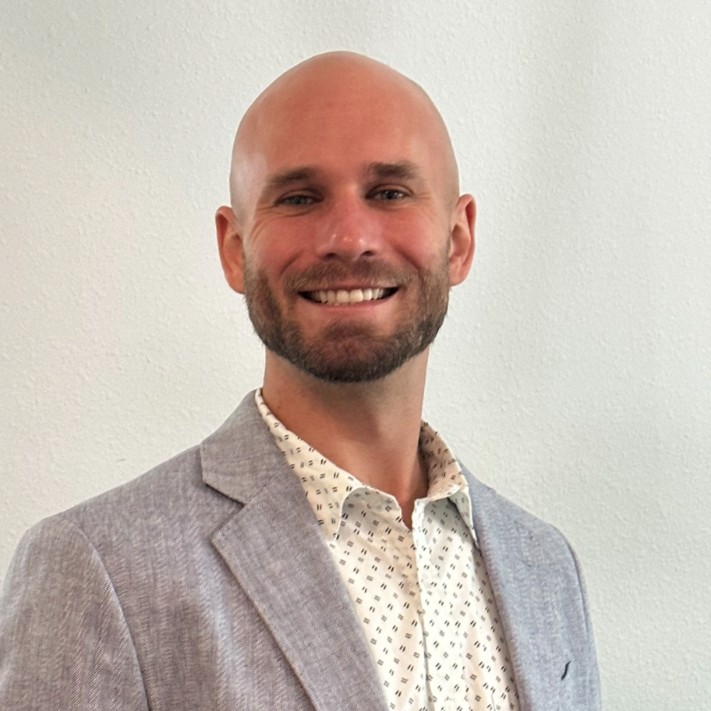
Today we’d like to introduce you to Jon Wayland.
Hi Jon, so excited to have you with us today. What can you tell us about your story?
My path to building The Dollar Web was anything but direct. I started college thinking I’d become a high school English teacher, quickly realized writing wasn’t my natural strength, and switched to math. After observing in classrooms, I figured out teaching wasn’t for me either, so I pivoted again and became a pure math major. With no clear career destination in mind, I went on to earn a master’s degree in applied mathematics.
What really shaped me wasn’t the coursework, though. It was an assistantship in an applied research lab where I worked as a statistical consultant on dozens of projects across different domains. That experience showed me something powerful: data, when used well, creates value everywhere. I landed in healthcare analytics and stayed because I loved the idea that my work could positively impact real people’s lives.
Over time, I became fascinated with machine learning and AI, and I started dreaming up business ideas of my own. The problem was, I wasn’t a web developer. I could build models and analyze data, but I couldn’t turn ideas into real products. And once I met my wife and started a family, taking big financial risks wasn’t an option.
Everything changed when ChatGPT launched. For the first time, I felt like I had a technical partner that could help me bring ideas to life. Around that time, I had the idea to build my own alternatives to everyday productivity tools. I grew up watching my dad make things by hand, even our laundry detergent, so the DIY mindset was always there. This was just the digital version of that.
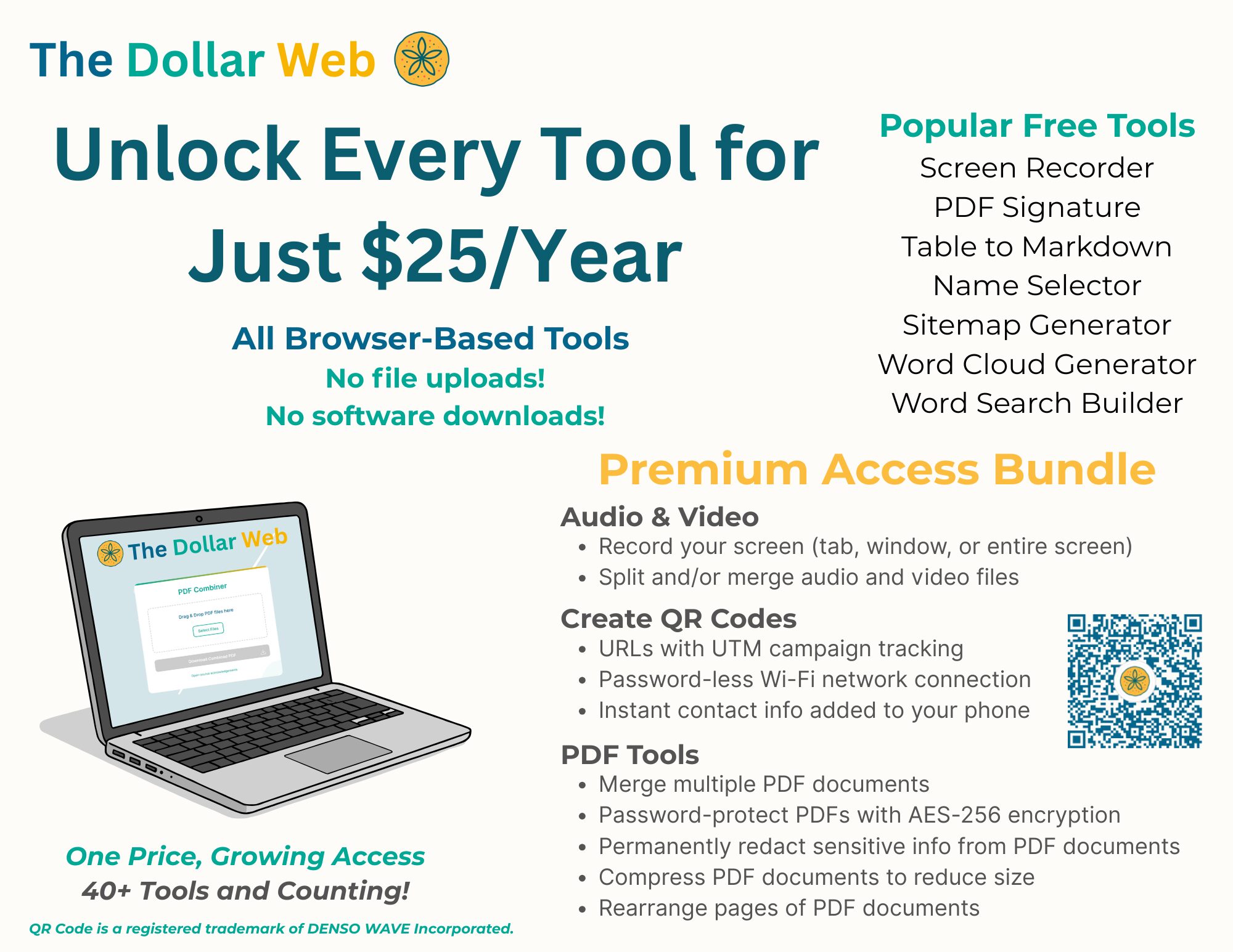
I started small, building a QR code generator because I didn’t want to pay for one. Then I made smarter QR tools for WiFi access and contact sharing. After that came PDF tools, because I was tired of cycling through free trials just to combine files. Before I knew it, The Dollar Web was taking shape.
I built the entire platform in about three months, working early mornings, late nights, and weekends, all while holding a full-time job. I’ve never spent a full workday on it, but I use the tools constantly myself, and now so do people all over the country for their everyday digital tasks.
What began as a personal project has turned into something much bigger. My long-term goal is to make simple, useful software accessible to everyone at the most affordable price possible. The Dollar Web is proof that with the right tools and a lot of persistence, you don’t need a traditional tech background to build something meaningful.
Alright, so let’s dig a little deeper into the story – has it been an easy path overall and if not, what were the challenges you’ve had to overcome?
In a lot of ways, it’s been smoother than it ever could have been without AI. Having an AI “companion” made it possible for me to build things I never could have built on my own. But that doesn’t mean it was easy.
Time has been the biggest challenge by far. I have three kids under five, so my windows to work were early mornings, late nights, and whatever pockets of time I could find in between. There were plenty of days where progress meant writing a single feature, fixing one bug, or even just sketching out an idea before someone needed a diaper change.
AI also isn’t perfect. It can confidently give you code that looks right but doesn’t actually work. That forced me to really learn the fundamentals of web development, new coding languages, and modern tools instead of just copying and pasting. In a way, that made the project better as it had the human touch.
So while the road wasn’t smooth, it was incredibly rewarding. Every challenge made the end result stronger, and every late night reminded me why I started in the first place: to create something useful, affordable, and built with real people in mind.
As you know, we’re big fans of you and your work. For our readers who might not be as familiar what can you tell them about what you do?
My career has taken me through several corners of the healthcare industry, from a fully integrated health system to health insurance to healthcare technology. Along the way, I worked my way up to leading data science teams at a huge health insurer, and today I serve as a Vice President of Data Science at one of the world’s largest virtual care technology companies.
My focus has always been on using data and machine learning to solve real business problems. That’s what led me to go back to school for an MBA, so I could better connect advanced analytics with business strategy and measurable outcomes. I don’t just care about building models, I care about building solutions that actually move the needle.
What I’m most proud of is the teams I’ve built and the impact we’ve created together. I’ve had the opportunity to lead high-performing data science teams that delivered machine learning solutions generating millions of dollars in value. Some of that impact came from hands-on technical work, and some of it came from helping leaders understand how to use data to make smarter decisions.
What sets me apart is that I live comfortably in both worlds. I can get deep into the technical side of analytics, but I also know how to translate that work into business language that executives can act on. At the end of the day, my goal has always been the same: build strong teams, create meaningful impact, and use data to make healthcare work better for the people it serves.
Is there anything else you’d like to share with our readers?
If there’s one thing I’d want readers to take away from my story, it’s that you don’t need a perfect plan or a traditional path to build something meaningful. My career has been full of pivots, side projects, and late-night experiments, but every step taught me something valuable.
The Dollar Web started as a simple idea to save a few dollars on software I didn’t want to pay for. Today, it’s a growing platform used by people for everyday digital tasks. That transformation didn’t happen because I had unlimited time or a massive team. It happened because I stayed curious, kept learning, and used the tools available to me, especially AI, to turn ideas into reality.
I’m also building this alongside a full-time career and a young family, which keeps me grounded. When you only have a few hours here and there, you become very intentional about what you build and why you build it.
So whether you’re thinking about launching a side project, learning a new skill, or just exploring what’s possible with technology, my advice is simple. Start small, stay consistent, and don’t be afraid to try. You never know where a single idea might lead.
Pricing:
- Free Plan
- Premium Plan: $25 per Year
Contact Info:
- Website: https://thedollarweb.com/
- Instagram: https://www.instagram.com/thedollarwebpro/
- LinkedIn: https://www.linkedin.com/company/the-dollar-web
- Twitter: https://x.com/thedollarweb