





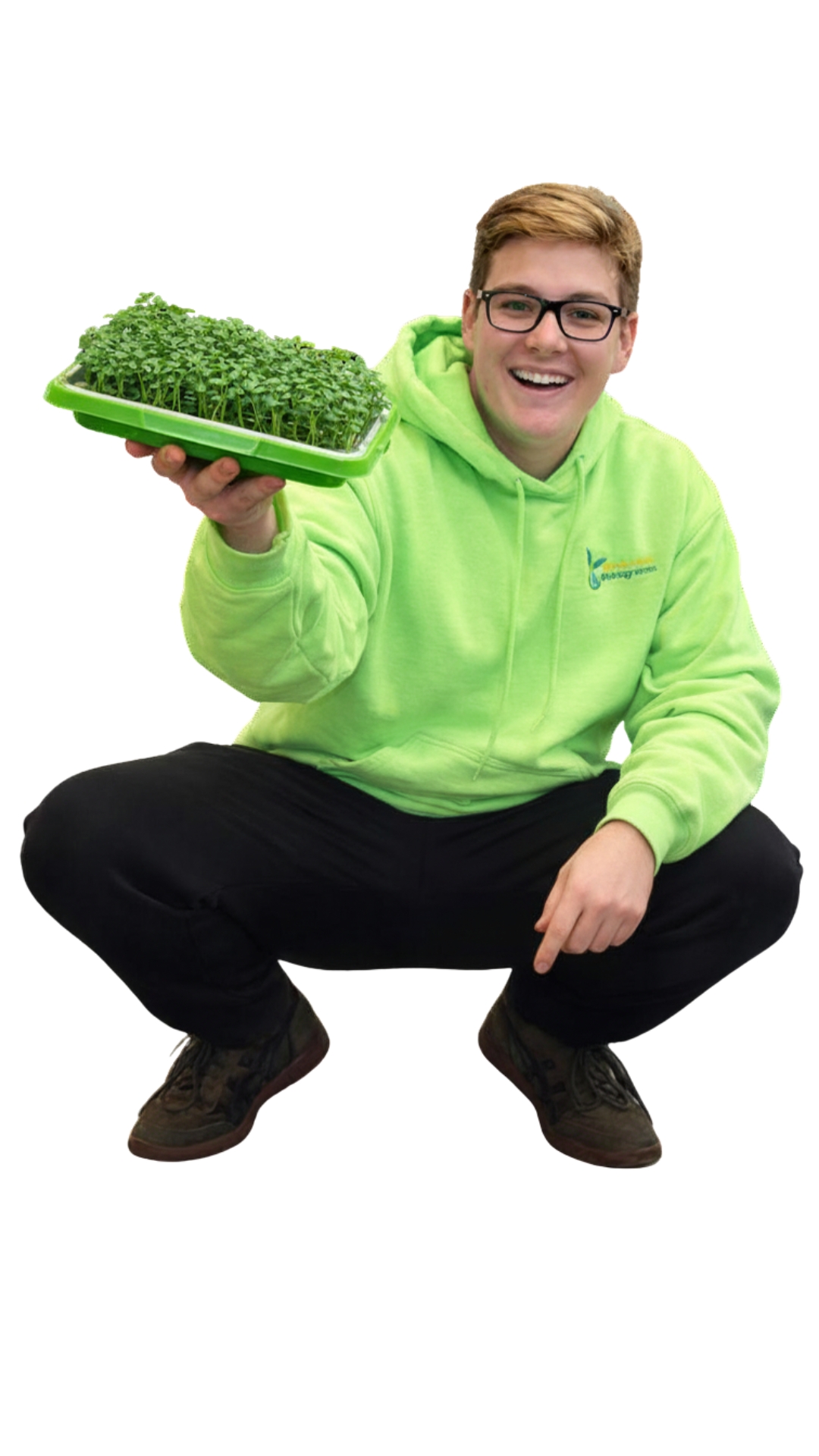
Today we’d like to introduce you to Connor Hiebel.
Alright, so thank you so much for sharing your story and insight with our readers. To kick things off, can you tell us a bit about how you got started?
Amelia Island Microgreens started with something very personal: my health. Growing up, I faced medical challenges that affected almost every part of my life. I missed a lot of school, and there were times when pain made even everyday activities difficult and sometimes impossible. Around age seven, I went through a particularly difficult period that led my family to explore how food could support my health. That was when microgreens became part of my life.
These tiny plants became something much bigger for me. Microgreens are part of my medicine, and learning to grow them gave me a way to participate in caring for myself. There is something encouraging about planting seeds, watching them grow, and knowing that what you are growing can help nourish your body.
In 2020, during COVID, my mom and I started Amelia Island Microgreens. We wanted to share something that had made a difference in our own lives. We began by growing and selling fresh microgreens, but eventually realized that teaching people to grow their own could have an even greater impact.
That realization changed the direction of our business. Instead of only providing someone with a container of greens, we could give them the tools and confidence to keep growing food for themselves.
We developed our “Ready, Set, Grow!” kits to make the process approachable, especially for beginners. We paired the kits with a free, 10-part video series and ongoing support because we wanted people to feel comfortable asking questions. You do not need a big backyard or years of gardening experience. A little space, water, and attention can lead to a harvest in about seven to ten days.
Building the business has also meant figuring out how to work with my own limitations. My health does not always follow a schedule, and being an entrepreneur has taught me to be flexible, ask for help, and keep moving forward when things take longer than expected. Working alongside my mom has been a big part of that journey.
Some of the experiences that mean the most to me have involved sharing microgreens with others. We have donated greens to people experiencing homelessness, provided kits for a U.S. Pain Foundation pediatric camp, and helped bring growing experiences into local schools. Because I know what it feels like to face challenges as a kid, giving another young person something positive to grow and care for feels especially meaningful.
We have also worked to make the business more sustainable. A $10,000 grant through FedEx and Hello Alice helped us remove 98% of our single-use plastics, which was an exciting step forward.
Today, our kits have reached people across the United States and Canada. Our mission is still the same: to educate and empower people to grow their own nutritious, delicious, economical food.
When I look at how we started, I see a family trying to help me feel better. Now, I see an opportunity to help other people discover what they can grow, even when they are starting small.
I’m sure it wasn’t obstacle-free, but would you say the journey has been fairly smooth so far?
It definitely hasn’t been a smooth road. One of the biggest challenges has been learning how to build a business while living with health issues that don’t always follow a schedule. I can have plans for what I want to accomplish, but that doesn’t mean my body will cooperate that day. That can be frustrating, especially when I’m excited about something and want to keep moving forward.
I’ve had to learn to work within my limitations, and sometimes that means changing plans, asking for help, or accepting that something will take longer than I hoped. It’s hard when you have the motivation and ideas, but your energy or health can’t keep up. There are times when I know what needs to get done, and I simply don’t have the capacity to do it.
A big part of this journey has been learning to give myself grace. I’m still working on that. It’s easy to focus on everything I haven’t finished instead of recognizing the effort it took to do what I could. I’m learning that needing rest doesn’t mean I’m lazy, and asking for support doesn’t take away from what I bring to the business. Some days, doing my best looks different than it did the day before.
Working alongside my mom has been a huge part of making this possible. Having someone who understands my health and believes in what we’re building means a lot. We’ve had to figure things out together, communicate about what I can realistically take on, and adjust as we go.
Entrepreneurship has taught me to be flexible and patient with myself. I still have goals, and I still want to grow the business. But I’m learning how to pursue those goals in a way that also respects my health. That’s an ongoing process, and giving myself permission to learn along the way has been just as important as learning how to run the business.
Great, so let’s talk business. Can you tell our readers more about what you do and what you think sets you apart from others?
One of the things I want people to know is how easy it can be to grow microgreens for yourself. You don’t need a garden, a big backyard, or a green thumb. You can grow them indoors in a small space, and most varieties are ready to harvest in just seven to ten days. Getting to eat something you grew yourself is pretty exciting, especially when you thought you couldn’t grow anything.
At Island Microgreens, we specialize in helping people get started with that experience. Our “Ready, Set, Grow!” kits bring together the supplies you need, along with instructions, a free 10-part video series, and support when questions come up. We want you to feel confident from planting your first seeds to cutting your first harvest.
Our two-tier trays make watering simple by allowing you to water from the bottom. Once the greens are ready, you can add them to sandwiches, salads, wraps, eggs, or whatever you already enjoy eating. You don’t have to completely change the way you cook to make room for fresh greens.
What sets us apart is the thought we put into helping beginners succeed. We choose pathogen-tested seeds and make our growing process approachable. We also offer refills so people can keep using their trays and growing more food. Teaching is a big part of what we do, because we want people to understand the process and feel comfortable continuing on their own.
Since starting with kits for people, we’ve also branched out into growing kits for pets. Our Jurassic Greens kits are designed for growing fresh greens for reptiles, and our Meow Greens kits let people grow grasses for their cats and dogs. Different animals have different dietary needs, so choosing greens appropriate for your pet is part of that experience.
I love that this gives people another way to connect with what they’re growing. You can grow something for your own plate and something for an animal you love. Watching a tray grow is rewarding, and getting to share the results makes it even more fun.
Brand-wise, I’m most proud that we’ve built something around helping people feel capable. A person might start out unsure whether they can keep a tray alive, then send us a picture of their first harvest. Those moments mean a lot to me because they show that the education and support matter.
We want readers to know that they can start small. One tray is enough to learn, enjoy a harvest, and see whether growing microgreens fits into their life. Our job is to help make that first step feel easy and give them the support to keep going.
Where do you see things going in the next 5-10 years?
Over the next five to ten years, I see growing some of our own food becomes a more normal part of everyday life. With food costs rising, the unpredictibility of our food chain, and being so disconnected from where our food comes from, growing microgreens is an approachable way to build that connection. You don’t need land or a whole season to get started. You can grow a tray indoors and see results in about a week.
I think convenience will play a big role in where the industry goes. People want fresh food, but they also need something that fits into their lives. There’s an opportunity to make growing systems easier to use, instructions clearer, and ongoing growing more affordable. For us, that means thinking about the whole experience: how someone gets started, what questions they might have, and what will help them keep growing after their first harvest.
I also see opportunities to bring more hands-on growing into schools and community programs. Growing food gives kids something they can watch, care for, and eventually taste. I would love to see more young people have that experience, especially kids who might not otherwise have access to a garden.
Another area I’m excited about is growing greens for pets. We’ve already expanded into kits for reptiles, cats, and dogs, and I think there’s room to help more pet owners learn what they can grow for their animals’ specific needs. It adds another reason for someone to try growing at home.
I hope sustainability continues to shape the industry, too. Reusable equipment, refill options, and less disposable packaging are all things I want to see more of as home growing becomes more accessible.
For Island Microgreens, I want growth to mean that more people feel confident growing for themselves. If someone who has always said, “I kill every plant,” can harvest their own greens and feel excited to plant again, that’s the kind of change I want to help create.
Pricing:
- Microgreen Masterclass: free
- Fresh Start Grow Kit: $35
- Endless Harvest Grow Kit: $50
- Reptile Microgreens: $35
- Seed Refills: $17
Contact Info:
- Website: https://islandmicrogreens.com
- Instagram: https://www.instagram.com/ameliaislandmicrogreens/
- Facebook: https://www.facebook.com/AmeliaIslandMicrogreens
- LinkedIn: https://www.linkedin.com/in/connorhiebel/
- Youtube: https://www.youtube.com/@islandmicrogreens
- Other: https://islandmicrogreens.com/pages/microgreensathome